Venice Guide and Boat
Venice Art and History: A Complete Guide to the City’s Greatest Masterpieces
There are cities with great art, and there are cities that are themselves works of art. Venice is rare among the places in the world that belong to the second category — a city where the architecture, the paintings, the sculptures and the urban fabric itself constitute a single, continuous artistic achievement that unfolded over the course of a thousand years.
But that breadth can be bewildering. Venice’s artistic heritage is distributed across dozens of churches, museums, palaces and scuole — some world-famous, others known only to specialists and well-guided visitors. The Doge’s Palace alone contains more great painting per square metre than most national galleries. The Accademia Galleries hold the greatest collection of Venetian Renaissance art in existence, yet are visited by a fraction of the numbers who pass through St Mark’s Square. Ca’ Rezzonico offers an almost perfectly preserved window into the social world of 18th-century Venice that most travellers never find at all.
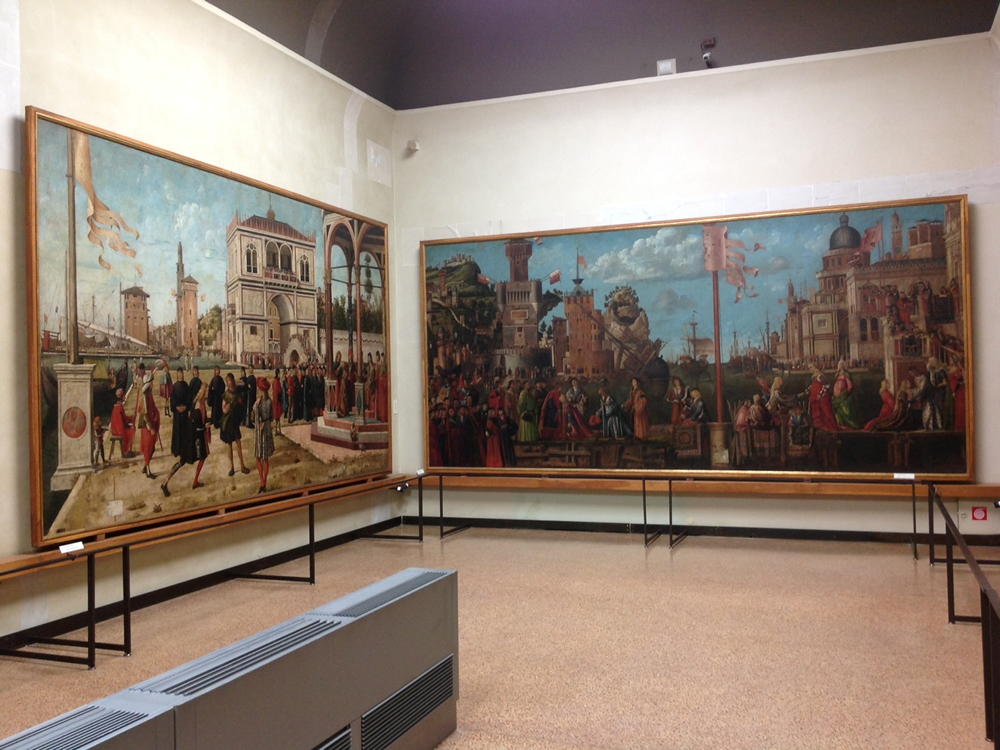
This guide is an introduction to the extraordinary artistic and historical legacy of Venice: what exists, where to find it, how to understand it, and how to experience it in a way that goes beyond the surface.
Why Venice Produced the Greatest Painters in Europe
The story of Venetian painting is unlike the story of art anywhere else in Europe, and understanding why requires a brief detour into history.
Venice was, for most of its independent existence between the 9th and 18th centuries, one of the wealthiest cities in the world. Its position as the dominant trading power between Europe and the East gave it access to materials — pigments, gold, silk, spices — that were simply unavailable elsewhere in the quantity and quality that Venice could command. When Venetian painters began to develop their distinctive style in the 15th century, they did so in a context of extraordinary material abundance, combined with a tradition of Byzantine icon-making that gave them an unusually sophisticated understanding of colour and light.
The result was what art historians call the Venetian school — a tradition of painting defined above all by its treatment of colour and atmosphere. Where Florentine painters of the same period prioritised line, structure and sculptural form, the Venetians prioritised the shimmering, ever-changing quality of light on water, on silk, on human skin. This was not a coincidence: it reflected the world they lived in. Venice’s particular light — filtered through water and reflected back from the canals — shaped the way its painters saw, and what they painted.
The result was a tradition of astonishing richness: Giovanni Bellini, Giorgione, Titian, Tintoretto, Veronese, Tiepolo — a sequence of painters spanning nearly three centuries, each transforming what they inherited and leaving the next generation something larger than they had received.
The Essential Artists of Venice: A Reference Guide
| Artist | Period | What to Look For |
| Giovanni Bellini | c. 1430–1516 | The founder of the Venetian school. His luminous altarpieces, scattered across the city’s churches, define the moment Venetian painting discovered its distinctive quality of light. San Zaccaria and the Frari hold his finest works. |
| Giorgione | c. 1477–1510 | Mysterious and revolutionary. His Tempest in the Accademia Galleries is one of the most debated paintings in history — nobody has ever quite agreed on what it means. He died young and left fewer than a dozen universally accepted works. |
| Titian | c. 1490–1576 | The greatest painter of the Venetian Renaissance and one of the most influential artists in Western history. His Assumption of the Virgin in the Frari church is the most important painting in Venice. His portraits transformed how European painting thought about individuality. |
| Tintoretto | 1518–1594 | The most prolific and audacious of the great Venetians. His Paradise in the Doge’s Palace is the largest oil painting in the world. His cycle in the Scuola Grande di San Rocco is among the most ambitious decorative programmes ever undertaken by a single artist. |
| Paolo Veronese | 1528–1588 | The master of pageant and colour. His vast banquet scenes — the Feast in the House of Levi in the Accademia, the Marriage at Cana (now in the Louvre) — combine brilliant colour with an almost cinematic sense of staging. He was once hauled before the Inquisition for including dogs and jesters in a religious painting. |
| Giovanni Tiepolo | 1696–1770 | The last great master of the Venetian tradition. His ceiling frescoes at Ca’ Rezzonico represent the final flowering of Baroque decorative painting in Venice — dazzling, theatrical and technically brilliant. |
| Canaletto | 1697–1768 | The master of the veduta, or view painting. His extraordinarily precise depictions of Venice and its Grand Canal were the travel souvenirs of the 18th-century Grand Tour. Most of his best works are now in British collections, but the Ca’ Rezzonico holds important examples. |
Where to Find the Greatest Art in Venice
Venice’s artistic heritage is distributed across an extraordinary range of locations — not concentrated in a single museum, but scattered through churches, palaces, confraternities and civic buildings across the entire city. Here is a guide to the essential places.
| Accademia GalleriesVenice’s greatest art museumThe definitive collection of Venetian painting from the 14th to the 18th century. Bellini, Giorgione, Titian, Tintoretto, Veronese, Tiepolo — all represented at their finest. Less crowded than the Doge’s Palace and profoundly rewarding. Book in advance. | Doge’s PalaceThe political heart of the RepublicState rooms decorated by the greatest Venetian painters, culminating in Tintoretto’s Paradise — the largest oil painting in the world. The Secret Itineraries tour accesses parts of the palace closed to standard visitors. Essential. |
| The Frari (Santa Maria Gloriosa dei Frari)The greatest church for painting in VeniceHome to Titian’s Assumption of the Virgin — arguably the most important painting in Venice — and his equally extraordinary Pesaro Altarpiece. Also houses Giovanni Bellini’s luminous sacra conversazione and Titian’s own tomb. | Ca’ Rezzonico18th-century Venice in amberA palazzo museum dedicated to the decorative arts and painting of Baroque and Rococo Venice. Tiepolo ceiling frescoes, period furniture, porcelain, lacquerwork and some of Canaletto’s finest Venetian views. An undervisited masterpiece. |
| Scuola Grande di San RoccoTintoretto’s lifetime projectTintoretto spent more than 20 years covering the walls and ceilings of this confraternity building with one of the most ambitious decorative cycles in Western art. Over 50 paintings, many on an enormous scale. Henry James called it ‘the most perfect work of genius in Venice’. | Peggy Guggenheim CollectionVenice’s window on modern artThe only major museum of modern and contemporary art in Venice, housed in Peggy Guggenheim’s palazzo on the Grand Canal. Picasso, Dalí, Kandinsky, Pollock, Ernst, Magritte — a superb collection in a breathtaking setting. |
| Ca’ d’Oro (Franchetti Gallery)Gothic palace, Renaissance collectionThe most beautiful facade on the Grand Canal, housing a refined collection of Renaissance bronzes, tapestries, and paintings including Mantegna’s St Sebastian — one of the most powerful images of martyrdom in Italian art. | Basilica di San MarcoByzantine art on an extraordinary scaleThe interior of St Mark’s Basilica is itself a work of art: 8,000 square metres of golden mosaics laid over nine centuries, telling the stories of the Old and New Testaments. The Pala d’Oro altarpiece is one of the greatest examples of medieval goldsmithing anywhere. |
Venice’s History Through Its Art: Three Key Moments
The Byzantine Foundation (9th–13th centuries)
Venice’s first great artistic period was shaped entirely by its relationship with the Byzantine East. As the dominant trading power between Europe and Constantinople, Venice accumulated Byzantine objects — icons, reliquaries, gold mosaic tesserae, carved ivories — and Byzantine craftsmen, who shaped the artistic culture of the city in ways that persisted long after the Byzantine Empire itself had fallen.
The most visible expression of this inheritance is St Mark’s Basilica, which was modelled on the Church of the Holy Apostles in Constantinople and decorated over centuries by Byzantine and Venetian craftsmen working in the Byzantine tradition. The extraordinary golden mosaics of the interior are the largest surviving programme of Byzantine-influenced art in the Western world.
The other great survival of this period is the Pala d’Oro — the golden altarpiece behind the high altar of St Mark’s — which was assembled partly from Byzantine enamel panels looted from Constantinople during the Fourth Crusade of 1204, and partly from new work commissioned by successive Doges. It is one of the finest examples of medieval goldsmithing and enamelling in existence.
The Renaissance and the Birth of Venetian Painting (15th–16th centuries)
The 15th and 16th centuries were Venice’s greatest period of artistic production. It was during these two centuries that the Venetian school of painting came into existence, developed its distinctive character and produced the sequence of masters — Bellini, Giorgione, Titian, Tintoretto, Veronese — who placed Venice at the centre of European artistic life.
What made Venetian Renaissance painting different from its Florentine counterpart was, above all, its treatment of colour and light. Venetian painters discovered oil painting before their Florentine contemporaries — probably through contact with Flemish traders — and exploited its possibilities with an enthusiasm that transformed European art. Oil paint allowed colours to be built up in translucent layers, creating a luminous, atmospheric quality that was entirely new, and that reflected Venice’s own extraordinary visual environment.
The Accademia Galleries constitute the most comprehensive available survey of this tradition, from Bellini’s early sacra conversazioni through to Tiepolo’s last great decorative schemes. But the paintings of the Venetian Renaissance are also distributed throughout the city’s churches and civic buildings — the Frari, the Scuola Grande di San Rocco, the Doge’s Palace, the church of San Zaccaria — in a way that makes Venice itself a kind of open-air museum of the greatest painting tradition in European history.
The Baroque and the Republic’s Final Flourishing (17th–18th centuries)
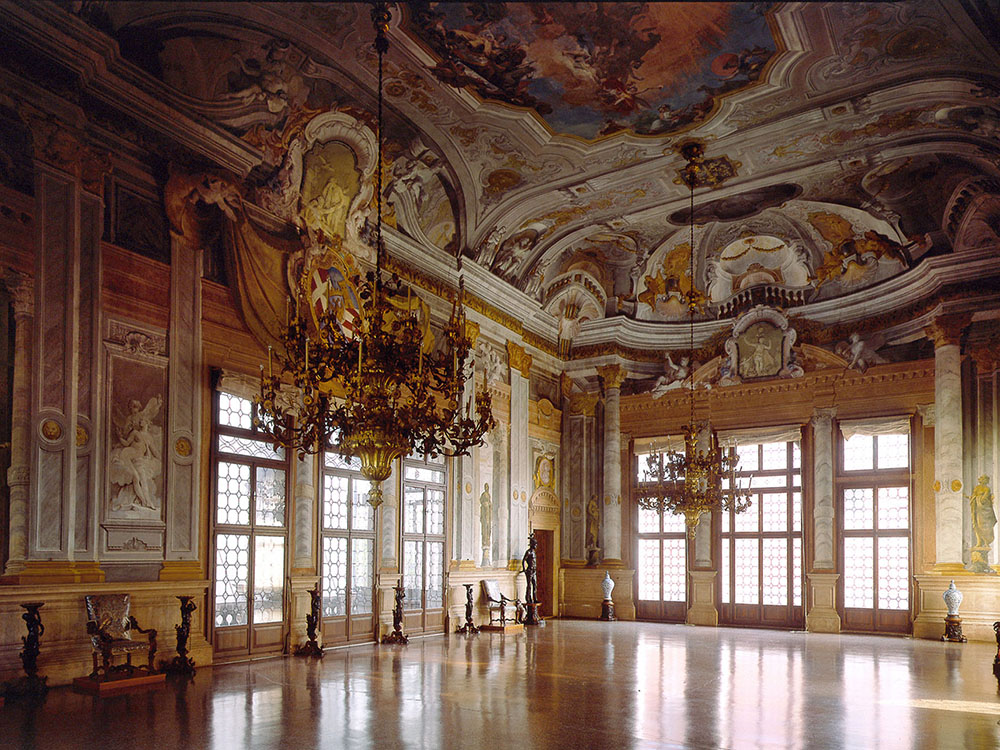
Venice’s final century as an independent republic — the 18th century, before Napoleon ended the Serenissima in 1797 — was in many ways its most brilliant socially and decoratively, even as its political and commercial power declined. The great Baroque palaces along the Grand Canal were built or completed during this period, and the interior decoration of Ca’ Rezzonico offers an almost perfectly preserved picture of how Venetian aristocratic life looked and felt at its peak.
Giovanni Battista Tiepolo, working in the first half of the 18th century, was the last great master of the Venetian decorative tradition — his ceiling frescoes at Ca’ Rezzonico and the Palazzo Labia represent the culmination of a tradition of theatrical, light-filled decoration that stretched back to Veronese. At the same moment, Canaletto was producing the meticulous vedute that served as visual souvenirs for the Grand Tour aristocrats who made Venice their final destination — paintings that captured the physical reality of the city with a precision no photograph has ever quite matched.
The Story of Venice and Palladio: Architecture as Art
Any complete account of Venice’s artistic heritage must include its relationship with Andrea Palladio — the greatest architect of the Italian Renaissance and one of the most influential figures in the history of Western architecture.
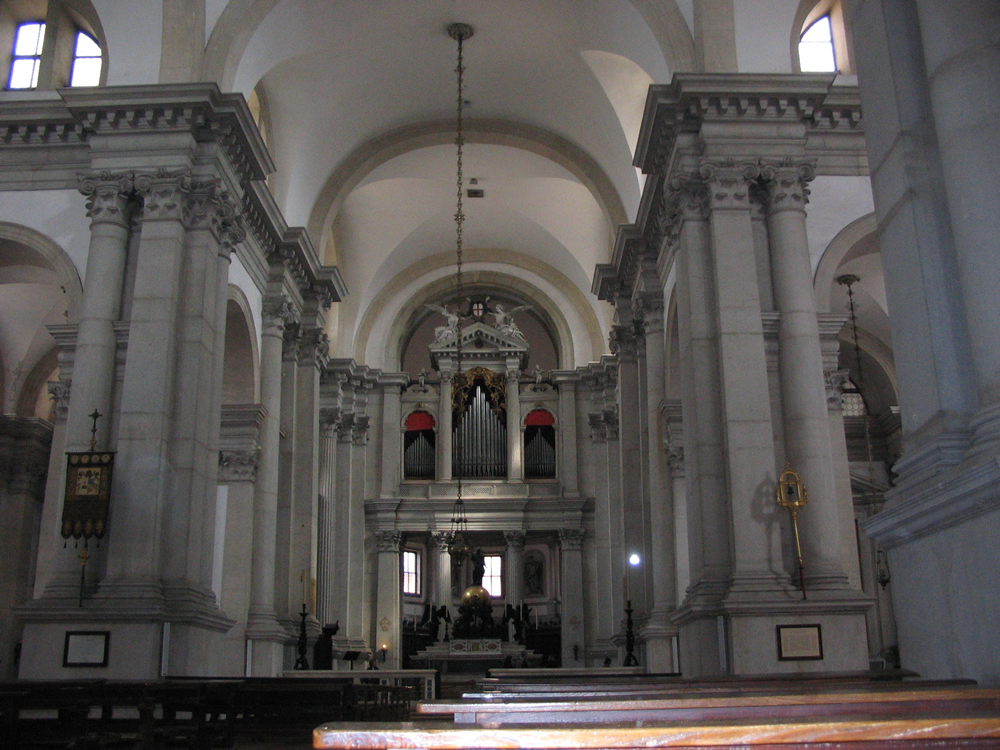
Palladio’s work in and around Venice is concentrated in two main areas. Within the city itself, his churches — San Giorgio Maggiore (on the island opposite St Mark’s Square) and the Redentore (on the Giudecca) — represent the application of classical temple architecture to Christian religious buildings, with a rigour and elegance that had never been achieved before and has rarely been surpassed since. The interior of San Giorgio Maggiore, with its cool white light and perfect proportions, contains major works by Tintoretto and is one of the most serene spaces in Venice.
Beyond the city, on the Venetian mainland, Palladio designed the sequence of villas that constitute his greatest architectural legacy — buildings that inspired Jefferson’s Monticello, Inigo Jones’s English Palladianism and the architectural tradition of the entire English-speaking world. The Palladian Villas and Wine tour offered by Venice Guide and Boat combines visits to these extraordinary buildings with an exploration of the Veneto’s celebrated wine country — one of the most distinctive day trips available from Venice.
The Rialto: Commerce, Faith and the Art of Daily Life
Not all of Venice’s artistic heritage exists in museums and churches. Some of the most interesting history in the city is written into the urban fabric itself — into the markets, the palaces, the streets and the institutions that shaped Venetian life for centuries.
The Rialto — the commercial heart of Venice since the earliest days of the Republic — is the best example of this. The Rialto Bridge is a feat of Renaissance engineering as much as architecture, and the covered arcades of the ponte were, for centuries, the location of the most important financial transactions in Europe. The world’s first bank is said to have operated here. The first commercial newspaper — the Gazzetta — was sold here. The exchange rates posted at Rialto were monitored by merchants from London to Alexandria.
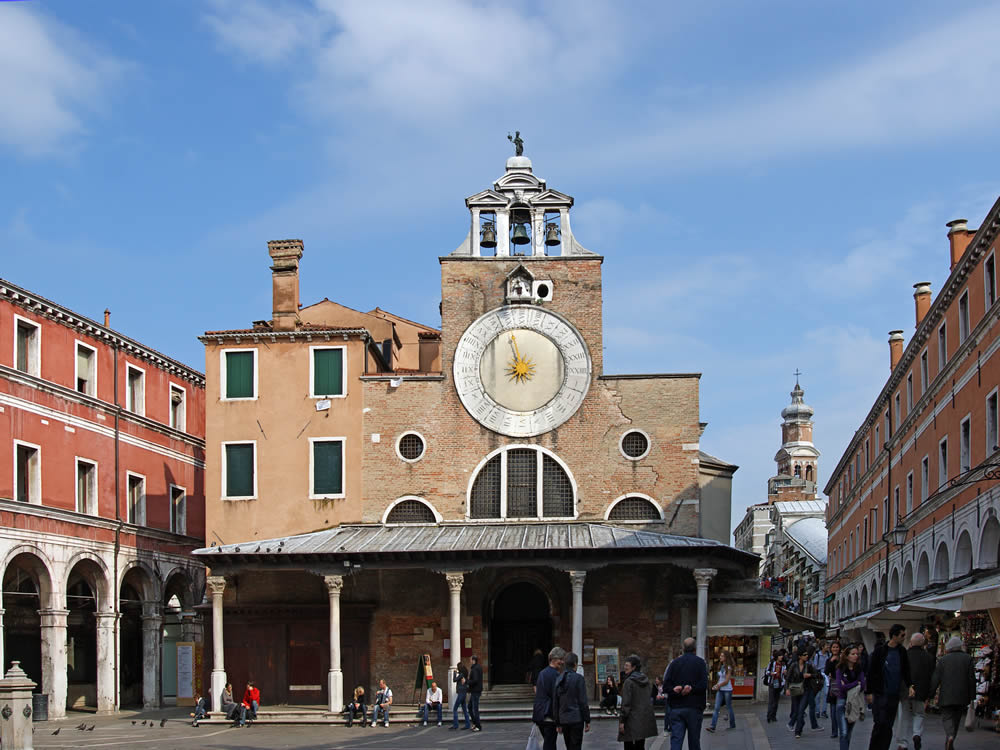
The area around the Rialto also contains some of Venice’s most historically interesting churches — San Giacomo di Rialto, said to be the oldest church in Venice, and San Giovanni Elemosinario, whose interior contains an important altarpiece by Titian. The Business and Faith in Rialto tour offered by Venice Guide and Boat explores this layered history, combining the commercial and architectural story of the Rialto with its religious and artistic dimensions in a way that reveals a completely different Venice from the one most visitors encounter.
Venice Art and History Tours with Venice Guide and Boat
Venice Guide and Boat’s Art and History programme is designed for visitors who want to go beyond the surface of what they are seeing — who want the paintings, the buildings and the history to make sense as a connected story rather than a series of impressive but isolated images.
All tours are conducted by qualified local guides with deep specialist knowledge of Venetian art and history. All include skip-the-line entry where applicable. All are private — meaning the tour is conducted exclusively for your group, allowing the guide to tailor depth, focus and pace to your specific interests.
The Art and History Tours
- Venetian Painting — a focused exploration of the Accademia Galleries with expert commentary on the development of the Venetian school from Bellini to Tiepolo. The finest introduction to Venetian Renaissance painting available in the city.
- A Venetian Palace — an immersive visit to Ca’ Rezzonico, exploring 18th-century Venice through its decorative arts, Tiepolo frescoes, Canaletto views and period interiors. A vivid and surprisingly moving picture of a vanished world.
- Venice Masters of Colour — a thematic tour exploring how Venice’s distinctive artistic tradition grew from its unique relationship with colour, light and material — visiting key works in churches, museums and civic spaces.
- Business and Faith in Rialto — an exploration of the Rialto area’s layered commercial, religious and artistic history, combining the story of Venice’s merchant republic with its expression in architecture and painting.
- Venice and Palladio — a tour dedicated to Venice’s relationship with Andrea Palladio, including his two great churches in the city and, optionally, an excursion to the Palladian villas on the Veneto mainland.
- The Guggenheim Collection — an expert-guided visit to the Peggy Guggenheim Collection, exploring the major movements of 20th-century art through one of the finest private collections ever assembled.
| All Art and History tours can be combined with other Venice Guide and Boat experiences — a boat section on the Grand Canal, a visit to additional churches or palaces, or a bacaro lunch in the Rialto area — to create a fully tailored day in Venice. |
Frequently Asked Questions
What is the most important art museum in Venice?
The Accademia Galleries hold the most comprehensive and important collection of Venetian painting in the world — representing the full sweep of the Venetian school from the 14th to the 18th century. For visitors with a specific interest in Venetian Renaissance painting, no other institution comes close. That said, the Doge’s Palace contains painting of comparable quality in a uniquely dramatic historical setting, and for breadth across all periods, the combination of the Accademia with Ca’ Rezzonico covers the full arc of Venetian artistic production.
Is the Accademia Galleries worth visiting?
Absolutely — and it is consistently underestimated by visitors who focus their time on the Doge’s Palace and St Mark’s. The Accademia houses works by Bellini, Giorgione, Titian, Tintoretto and Veronese of the first order, in an atmosphere that is calmer and more contemplative than the city’s most famous monuments. A guided visit significantly enhances the experience: without context, the chronological arrangement of the collection can feel opaque.
Can I visit the Accademia and the Doge’s Palace in the same day?
It is possible, but requires careful planning. Both institutions deserve a minimum of 90 minutes of focused attention, and combining them with travel time, queuing (if not booked in advance) and lunch means a very full day. Many visitors find it more rewarding to focus on one major museum per day and supplement it with visits to churches and smaller institutions. A local guide can help you make the most of the time available.
What is the best church to visit for art in Venice?
The Frari (Santa Maria Gloriosa dei Frari) in the San Polo sestiere is arguably the single richest church for painting in Venice — home to Titian’s Assumption of the Virgin, his Pesaro Altarpiece and Giovanni Bellini’s magnificent sacra conversazione. The Scuola Grande di San Rocco, immediately adjacent, contains Tintoretto’s lifetime decorative cycle and should be visited at the same time. San Zaccaria in Castello holds another great Bellini altarpiece. San Giorgio Maggiore across the water from St Mark’s contains important Tintorettos and Palladio’s incomparable interior.
Do I need a guide to visit the art museums of Venice?
You do not need a guide — but the experience is substantially richer with one. Venice’s artistic heritage is layered with historical, religious and political meaning that is genuinely difficult to decode without expert assistance. The Doge’s Palace in particular makes very little sense without knowledge of the Venetian constitution and the iconographic programmes chosen by the Council of Ten. The Accademia rewards visitors who can follow the development of the Venetian school across two centuries. A qualified guide provides the context that transforms looking into understanding.
A Living Artistic Tradition
One of the extraordinary things about Venice’s artistic heritage is that it is not a dead archive. The paintings hang in the buildings they were made for, the palaces still stand above the water, the churches still hold the altarpieces commissioned by the families who paid for them. Venice is a city in which the past and the present coexist with unusual intimacy — where you can stand in front of Titian’s Assumption in the Frari and understand, simply from the scale and the position of the painting above the high altar, exactly what it was intended to do and how it was intended to be seen.
That is the particular gift that Venice offers to anyone who comes to it with curiosity and the right guidance: not just the experience of looking at great art, but the experience of understanding where it came from and why it still matters. That understanding is what Venice Guide and Boat’s Art and History tours are designed to provide — one painting, one palace, one story at a time.
| Explore our full range of Venice Art and History tours — private, skip-the-line, led by qualified specialist guides. From the Accademia to the Guggenheim, from Titian to Tiepolo, from the Rialto to Palladio’s churches: the story of Venetian art is waiting for you. |

