Venice Guide and Boat
Venice with Kids: The Complete Family Guide to One of the World’s Most Extraordinary Cities
The most common concern parents have about bringing children to Venice is that the city will not be child-friendly. No playgrounds (or very few), lots of bridges to carry pushchairs over, a complex street network that seems designed to confuse adults let alone children, and the general assumption that culture-heavy destinations are better suited to adults than to young visitors.
This concern is understandable — and largely unfounded. Venice is, in practice, one of the most naturally engaging cities in the world for children of almost any age. The absence of cars immediately transforms the child’s experience of being in a city: there is no traffic to watch for, no danger at every kerb, no noise of engines. The streets belong entirely to pedestrians, the campi become genuine play spaces, and the canals — with their boats, their reflections, their birds and their extraordinary variety of water traffic — provide an endlessly shifting spectacle that holds children’s attention in ways that conventional sightseeing rarely does.
Add a glassblowing demonstration on Murano, a private boat onto the lagoon, the story of Casanova’s escape from the Doge’s Palace, and the chance to ride a gondola through narrow canals that seem built for exactly that experience, and Venice becomes something closer to an adventure than a cultural visit. This guide explains how to make that adventure as successful as possible — for children of every age and for the adults travelling with them.
Why Venice Works for Families
No cars
The single most significant advantage of Venice as a family destination is the complete absence of motor vehicles in the historic centre. In every other major city, travelling with children involves constant vigilance at road crossings, managing pushchairs on narrow pavements and the noise and fumes of traffic. In Venice, none of this applies. The calli are pedestrian spaces. The campi are safe play areas. Children can move at their own pace without the constant adult anxiety that urban traffic generates.
Water everywhere
Children are almost universally fascinated by water — and Venice provides water in extraordinary quantity and variety. The Grand Canal with its constant boat traffic, the narrow rio canals where gondolas pass inches from the fondamenta, the open lagoon with its boats and birds and islands, the reflections of buildings in still water: all of this holds children’s attention with a persistence that museums and monuments rarely achieve. A walk along any canal-side fondamenta in Venice, at any age, is more engaging than most dedicated children’s activities in most cities.
The boat as adventure
For children, a boat is not a means of transport — it is an adventure in itself. Venice’s private boat tours, gondola rides and lagoon excursions provide that adventure in a setting of extraordinary visual richness. The private boat experience — moving through the canals at water level, seeing the gondoliers rowing, watching the city appear from perspectives invisible on foot — consistently produces the kind of wide-eyed engagement in children that is the marker of a genuinely memorable travel experience.
Stories and mysteries
Venice is a city full of stories — and many of them are stories that children respond to with particular enthusiasm. The escape of Casanova from the Doge’s Palace prison (he climbed through the roof and over the rooftops in the middle of the night — genuinely remarkable). The glassblowers of Murano who were forbidden from leaving the island on pain of arrest. The horses of St Mark’s, looted from Constantinople in a crusade that was supposed to go to the Holy Land. The way the city is built on wooden piles driven into the mud, and why it doesn’t sink. Venice is full of this kind of material — the factual equivalent of a fairy tale — and a good guide will deploy it to keep children engaged through even the denser historical content.
| The key to a successful family visit to Venice is the same as the key to a successful visit of any kind: appropriate pacing. Children who are walked for six hours through museums and monuments will be exhausted and resentful. Children who have a morning of guided discovery, an afternoon of free exploration near a campo or canal, and an evening gelato walk will be engaged and enthusiastic. The private tour format — which allows pace and content to be adjusted continuously — is particularly suited to family visits. |
Venice by Age: What Engages Each Stage
| Age Group | What Captivates Them | Venice Guide and Boat Angle |
| Under 3 | Movement, water, boats, pigeons, market stalls, bright colours; short attention span but genuinely high sensory engagement | Private boat on the canal — movement, water, stimulation without walking; the Rialto Market in the morning for sensory variety; gondola ride |
| Ages 3–6 | Stories, animals, unusual things, water play, watching things being made; beginning to absorb simple narratives | Glassblowing demonstration on Murano (making and fire); gondola ride; the horses of St Mark’s; the Bridge of Sighs story; counting bridges |
| Ages 7–11 | Adventure stories, mysteries, craft processes, competition, maps and navigation; can engage with historical narrative if well pitched | Doge’s Palace (prison break story, the Giants’ Staircase, armour collection); Murano glassblowing; Three Islands Tour; the secret passages of the Palace |
| Ages 12–15 | History with moral complexity, craft and design at a serious level, urban adventure, social exploration | Secret Itineraries tour of the Doge’s Palace; Scuola Grande di San Rocco (Tintoretto’s scale and drama); lagoon boat freedom; Venetian history in depth |
| Ages 16+ | All adult content becomes accessible with the right framing; art history, social history, urban design, food culture | Full adult programme with peer-adjusted commentary; bacaro cicchetti experience; architecture; sustainable tourism themes |
The Best Sights in Venice for Children
The following are the sights and experiences in Venice that consistently engage children most strongly — selected not for their conventional cultural importance but for their specific appeal to young visitors.
| Glassblowing on Murano All ages — best from 3+ Watching a maestro vetraio transform molten glass into a finished object is one of the most compelling craft demonstrations anywhere. The combination of fire, colour, speed and the improbable delicacy of the finished object holds children’s attention with extraordinary consistency. A highlight of almost every family’s Three Islands Tour. | Doge’s Palace Best from 7+ The palace works for older children for two reasons: the sheer scale of the painting programme (Tintoretto’s Paradise, the largest oil painting in the world, is genuinely impressive even to those who know nothing about art) and the prison narrative — Casanova’s escape from the Leads is one of the great adventure stories in Venetian history, and a skilled guide will tell it in a way that makes the Palace come alive. |
| Gondola Ride All ages For children who have only experienced urban transport by bus or car, a gondola is something genuinely different — a private boat moving silently through narrow canals at water level, with the city pressing close on both sides. The experience of being that close to the water, and to the buildings above it, is both exciting and slightly magical. | Private Boat on the Lagoon All ages The open lagoon, for children, is the high point of many Venice family visits. The speed of the boat, the spray, the view of the city from the water, the outer islands appearing on the horizon — all of this produces the kind of engagement that no monument visit can match. The Three Islands Tour by private boat combines this adventure with the glassblowing and Burano’s colours. |
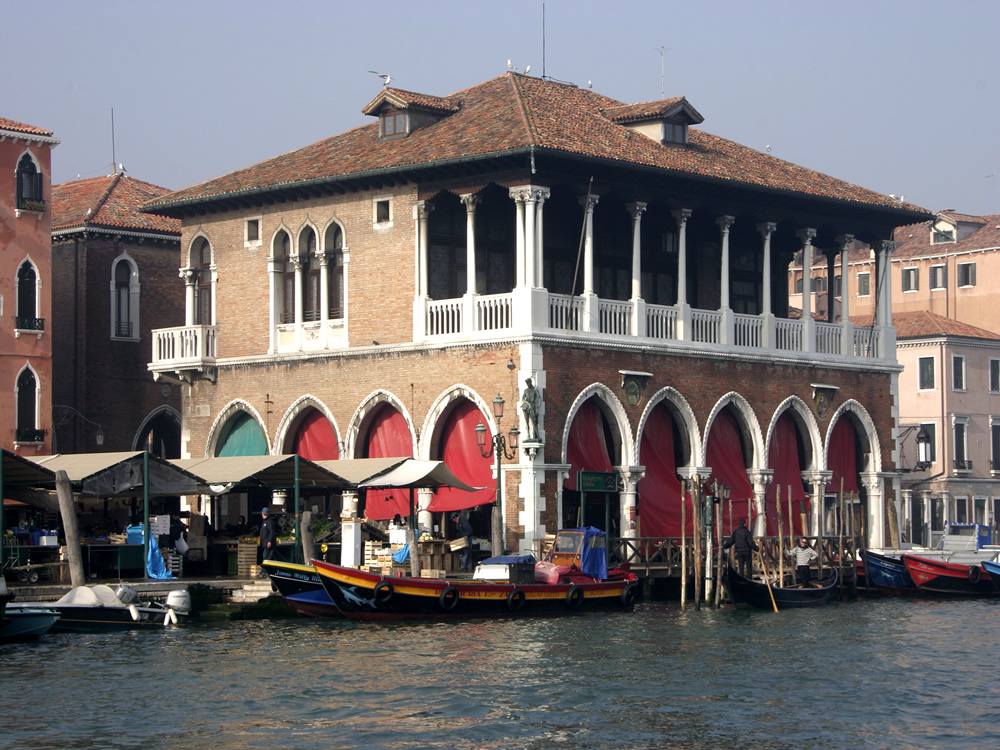
| Rialto Fish Market Best from 5+ The pescheria in the early morning is one of the most sensory-rich environments in Venice — the smell of the sea, the ice, the vivid colours of the catch, the speed of the vendors. Children respond to markets with genuine curiosity, and the fish market specifically provides a direct connection to the lagoon and its ecosystem that no museum can replicate. | St Mark’s Basilica Best from 6+ with good guide The mosaics are the key to engaging children in the Basilica. The gold-ground images — monsters, angels, biblical stories — are essentially picture books on an extraordinary scale, and a guide who can tell the stories they depict transforms a potentially overwhelming interior into a narrative experience. The horses on the loggia are a reliable highlight. |
| Burano — Coloured Houses All ages The visual impact of Burano’s coloured streets is immediate and total for children. Young children respond to the colour itself; older children enjoy learning why the houses are different colours (fishing families identifying their homes from the water). The island is small enough to explore comfortably on foot with children of any age. | Giardini and the Campi All ages Venice’s public gardens in Castello are the only significant green space in the historic centre and a genuine relief for families with young children who need open space. The city’s campi (particularly Campo Santa Margherita and Campo Santi Giovanni e Paolo) also function as outdoor play spaces where children can run freely. |
| Scuola Grande di San Rocco Best from 10+ The scale of Tintoretto’s decorative cycle — more than 50 paintings on walls and ceilings throughout the building — produces a physical response of awe even in children who have no background in art history. The Sala dell’Albergo, where you look up at a single enormous ceiling painting, is one of those spaces that works on anyone, regardless of age. | Torcello Cathedral Best from 8+ The ancient quality of Torcello — the oldest settled island in the lagoon, the cathedral dating to 639 AD, the near-total silence — affects children differently from how it affects adults, but it affects them. The Byzantine mosaics, particularly the Last Judgement on the west wall (with its vivid images of demons and tormented souls), tend to make a strong impression. |
The Family Two-Day Itinerary
This itinerary is designed for families with children aged approximately 7–14 — old enough to engage with the major sights, active enough to handle a full day. It prioritises movement and variety over depth at any single site, and builds in rest time and food stops. Adjust timings and stops freely according to your children’s specific interests and energy levels.
Day One: The City
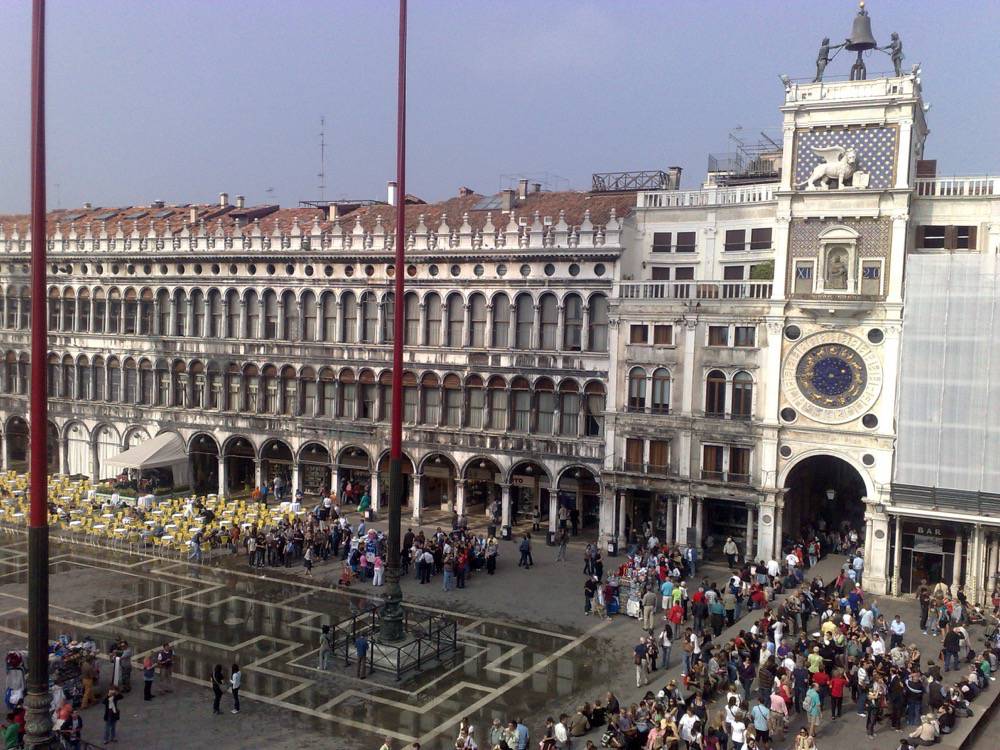
| 8:30 AM | St Mark’s Square before the crowds arrive. Coffee and a brioche for the adults, pastry for the children. Walk around the empty Piazza — let the children run in the space that will be crowded in two hours. |
| 9:00 AM | St Mark’s Basilica with a family-focused guide. Focus on: the gold mosaics (tell the stories they depict), the horses of St Mark on the loggia, the Pala d’Oro. Skip the queue with pre-booked entry. Allow 45–60 minutes. |
| 10:15 AM | Doge’s Palace. Ask for the Casanova escape narrative. The Armeria (weapons and armour collection) is consistently popular with children. Skip-the-line entry. Allow 75–90 minutes. |
| 12:00 PM | Lunch at a bacaro near the Rialto. Children who are open to it: cicchetti (polpette, crostini) are good finger food. Alternatively, any genuine neighbourhood trattoria away from St Mark’s Square. |
| 2:00 PM | Grand Canal by private boat — show the children the palaces from the water, explain how they were built on piles in the mud, point out the gondolas and delivery boats. Allow 45 minutes. |
| 3:00 PM | Free time in the Dorsoduro — Campo Santa Margherita (space to run), Zattere promenade (ice cream at Nico), the canal views. No agenda; let the children lead. |
| 5:30 PM | Aperitivo/juice for the children at a campo bar. Pizza or pasta for dinner — Venice has good pizza even if it’s not the regional specialty. Book ahead. |
| 8:30 PM | Evening walk along the Riva degli Schiavoni — the nighttime city, the reflections, the boats. Children who have been outdoors all day are often remarkably alert and engaged at this hour. |
Day Two: The Lagoon
| 8:30 AM | Optional: Rialto Market for children old enough to find the fish fascinating (from around 6–7 upwards). Allow 30 minutes, then cicchetti breakfast nearby. |
| 9:30 AM | Depart by private boat for the lagoon. The boat ride itself is the experience — children who were slightly resistant to the idea are almost always enthusiastic within five minutes of departure. |
| 10:15 AM | Murano: Museo del Vetro (Glass Museum — the historical section with ancient Roman glass is surprisingly gripping) followed by a glassblowing demonstration. Allow 75 minutes. Buy a small authentic piece as a souvenir — directly from the workshop where it was made. |
| 12:00 PM | Torcello: the cathedral and its mosaics (focus on the Last Judgement for children), Santa Fosca, the extraordinary silence. Lunch at the Locanda Cipriani or a simpler option in the piazza. Allow 90 minutes. |
| 2:00 PM | Burano: the coloured streets, the Lace Museum (older children who have an interest in craft; younger children may find the speed and detail of real lacework more engaging than expected), gelato on Via Galuppi. Allow 75 minutes. |
| 3:45 PM | Return to Venice by private boat — the afternoon light on the lagoon is beautiful, and children who have had an active day often enjoy the boat ride back in a quieter, more contemplative mood. |
| 5:00 PM | Arrival back in Venice. Free time, rest and dinner. The family that has done the Three Islands Tour in a day is usually simultaneously very tired and very happy. |
| The Two-Day Family Itinerary is designed as a framework, not a prescription. The most important thing is to build in genuine flexibility — children’s energy and interest levels change unpredictably, and a private tour format allows the guide to adapt accordingly. If the children are captivated by Murano’s glassblowing and want to spend another 30 minutes watching, the guide will accommodate that. If they are flagging after the Doge’s Palace, the Grand Canal boat ride can be shortened or moved to the next day. |
Venice Guide and Boat Tours for Families
Venice Guide and Boat’s private tours are particularly well suited to family visits — because the private format means that the guide’s entire attention is on your family, the pace can be adjusted continuously to match the children’s energy and interest, and the commentary can be pitched to a mixed-age group without compromise.
All Venice Guide and Boat guides have experience with family groups of all ages. The family-focused tour options adjust the guide’s approach significantly: more storytelling, more interactive questioning, more engagement with the children directly, more space for questions and digressions that children initiate.
Recommended tours for families
- Highlights of Venice (family version) — the essential historic centre including St Mark’s Basilica, Doge’s Palace and the Grand Canal, with a guide who pitches the content to the children’s age group. Skip-the-line entry essential with children who cannot sustain long waits.
- Three Islands Tour — the most popular family tour in the Venice Guide and Boat programme, combining the lagoon boat adventure with the glassblowing demonstration, Burano’s extraordinary colour and the ancient quiet of Torcello. Can be adjusted to prioritise the children’s interests (more time on Murano or more time on Burano, shorter visit to Torcello for younger children).
- Venice Lagoon Adventure — a more open-ended boat tour of the lagoon, without the structure of island visits, allowing the boat to respond to whatever the children find most engaging: following a fishing boat, watching birds on the mudflats, exploring the narrow channels of the outer lagoon.
- Venice in One Day (family version) — the full-day family programme combining the highlights tour in the morning with a lagoon boat experience in the afternoon, designed to cover the maximum variety in a single day.
- Venice at a Glance — a shorter, more focused tour for families with very young children or limited time, covering the most visually impactful sights in a compact morning.
| When booking a tour for a family, always provide the ages and interests of the children when contacting Venice Guide and Boat. This allows the guide to prepare age-appropriate content, to bring specific props or materials where relevant (maps, historical images), and to structure the narrative in a way that genuinely engages the youngest members of the group. |
Practical Family Logistics in Venice
| Pushchairs and prams | Venice has approximately 400 bridges, all with steps. A pushchair is a significant logistical challenge and should only be brought if the child genuinely cannot walk the required distances. A baby carrier or backpack carrier is significantly more practical. For infants who need a pram, specific pushchair-accessible routes (using the bridges with ramps, which are fewer but exist) are available from the Venice municipality website. |
| Transport | The vaporetto is the most convenient family transport — day passes cover the whole family on public water buses. For specific journeys with young children or luggage, a water taxi (motoscafo) is significantly easier than the crowded public boats. On the lagoon, the private boat tours operated by Venice Guide and Boat are far more comfortable for families than the public vaporetto to the islands. |
| Food for children | Venice’s bacari offer cicchetti that work well as children’s food — polpette (meatballs), crostini, small portions of fish. Most restaurants can accommodate children’s portions. Pizza is widely available. The best gelato (genuine artisanal, not tourist-facing) can be found at Gelateria Nico on the Zattere and Gelateria Il Doge in Santa Croce. Bring water and snacks for long walking days. |
| Accommodation | Stay in the historic centre for the full family experience — the early morning and evening Venice that is only available to those sleeping in the city is particularly memorable for children. Look for accommodation near the Dorsoduro (quieter, near Campo Santa Margherita) or the eastern Cannaregio (residential, near good local restaurants). Avoid the immediate area around St Mark’s Square, which is noisy and expensive. |
| Safety | The absence of cars makes Venice unusually safe for children compared to other major cities. The main concerns are: falling into a canal (the fondamente have no barriers — young children need to be supervised near the water); getting lost in the complex street network (dress children in a distinctive colour, establish a meeting point at the start of each walk); and sunstroke in summer (shade and water essential). |
| Nap and rest strategy | Build rest time explicitly into the itinerary — a 45-minute break in a campo or at the hotel after lunch makes a significant difference to afternoon energy levels, for children and adults. The Venice heat in summer makes midday rest even more important. Private tours can pause for ice cream or rest at any point; public tours cannot. |
| Museum tickets | Children under 6 enter most Venice museums free. Children 6–18 receive reduced rates at most institutions. The combined Venice Museums ticket (Doge’s Palace, Correr, Ca’ Rezzonico, Ca’ Pesaro) is good value for families visiting multiple museums. Some churches charge a small entry fee for adults but are free for children. |
| Best season for families | Spring (April–June) and early autumn (September–October) offer the best conditions for family visits — manageable temperatures, good weather, fewer crowds than peak summer. Summer works well for families who start early and rest in the middle of the day. Winter is generally not ideal for family visits with young children (cold, shorter days, acqua alta risk), though the Carnival period in February is spectacular. |
The Stories That Make Venice Work for Children
The single most important factor in a successful family visit to Venice is the quality of the storytelling. Venice is, at its core, a city of extraordinary stories — and many of those stories are stories that children respond to with particular enthusiasm.
Casanova’s escape from the Leads
In 1756, Giacomo Casanova — adventurer, spy, gambler and one of the most colourful figures of 18th-century Venice — was arrested by the Inquisitors of the Doge’s Palace and imprisoned in the Leads: the attic prison immediately beneath the lead roof of the Palace. A year later, in October 1756, he escaped — through the ceiling of his cell, across the roof of the Palace, down through a window into the Palace itself, out through a gate, across a bridge, and away into the night. It is one of the great escape stories in history, and the Secret Itineraries tour of the Doge’s Palace allows visitors (including children) to stand in the actual cell from which he escaped. For children aged 10 and above, this is the most engaging 90 minutes available anywhere in Venice.
The horses of St Mark’s
The four bronze horses on the loggia of St Mark’s Basilica have one of the most extraordinary biographies of any objects in the world. Made probably in the 4th century BC or 2nd century AD (scholars disagree), they were in Constantinople by the 4th century AD, looted by Venetian crusaders in 1204 and brought to Venice, stolen by Napoleon in 1797 and taken to Paris, returned to Venice after Napoleon’s defeat and placed back on the Basilica. They have been on the move, between the great powers of their era, for over 1,700 years. For children who like objects with histories, the horses are among the most gripping things in Venice.
How Venice is built
Children who learn that Venice is built on wooden piles driven into the mud — that beneath every building, beneath every church, beneath the Doge’s Palace and St Mark’s Basilica, there are wooden stakes (petrified by the specific combination of salt water and anaerobic mud) that have been holding the city up since the medieval period — respond with a combination of disbelief and fascination that is entirely understandable. The fact that this building technique has worked for a thousand years, and that the city continues to function on its wooden foundations, is one of the most compelling engineering stories in the world.
The secret of Murano glass
The story of the glassblowers of Murano — isolated on their island by the Republic of Venice to protect the trade secrets of their craft, granted aristocratic privileges but forbidden from leaving on pain of death, spied upon by agents of the Council of Ten to prevent their techniques from reaching competing states — is the kind of story that contains all the elements children find most engaging: craft, secrecy, power, danger and extraordinary skill. Told before the glassblowing demonstration, it transforms what might otherwise be a straightforward craft exhibition into a narrative experience.
| The most effective family guides in Venice are those who understand that children engage through narrative before they engage through aesthetics or history. A child who knows the Casanova story will look at the Doge’s Palace differently. A child who knows the story of the Murano glassblowers will watch the demonstration differently. A child who understands how Venice is built will walk across the Rialto Bridge differently. Story first, context second, monument third. |
What Children Say About Venice
After years of guiding families around Venice, the responses that children give to the experience consistently fall into two categories. The first: ‘When are we going on the boat again?’ The second: ‘Why do they let the fire get so close?’ (during the glassblowing demonstration). Both responses suggest that the city is doing what it does best for young visitors — providing genuine novelty and genuine engagement with things that are unlike anything they have encountered elsewhere.
The parents’ responses are equally consistent: ‘I was worried it would be too much for them, but they loved it.’ And then, almost always: ‘They want to come back.’ Which is, ultimately, the finest measure of a successful family trip.
Venice rewards children in ways that more obviously child-focused destinations do not — not with designed entertainment or age-appropriate facilities, but with the raw material of an extraordinary, still-functioning civilisation built in one of the most improbable locations on earth. Children who have been to Venice have seen something genuinely unlike anything else. That is, in the end, exactly what a family travel experience should provide.
| Planning a family trip to Venice? Venice Guide and Boat offers private family tours for all ages — with guides experienced in pitching content to mixed-age groups, flexible pacing to match children’s energy, skip-the-line entry and private boat access to the lagoon. Contact us to build the family itinerary that works for your children’s ages and interests. |
Frequently Asked Questions
Is Venice safe for children?
Venice is one of the safest major tourist cities in Italy for children — primarily because the complete absence of motor traffic eliminates the main urban danger that requires constant parental vigilance. The main safety concern specific to Venice is the fondamente (canal-side walkways), which in many places have no barrier between the path and the water. Very young children need to be closely supervised near any canal edge. The risk of getting lost in the street network is real but manageable — the historic centre is small, and any sustained walking eventually produces a recognisable landmark.
What is the best age to take children to Venice?
Venice works for children from any age, but in different ways. For very young children (under 5), the primary engagement is sensory — the water, the boats, the market, the colours — rather than cultural. For children from about 6–7 onwards, the storytelling dimension opens up: the Casanova escape, the glassblowing secrets, the horse odyssey. For children from 10 upwards, the full historical and artistic programme becomes accessible with a guide who pitches it well. There is no ‘wrong’ age to bring children to Venice; there is only the question of how to adapt the experience to their specific stage.
Can I take a pushchair / pram to Venice?
A pushchair is possible in Venice but significantly challenging — the 400 bridges all have steps, and many of the calli are too narrow for a standard pram. A lightweight, foldable pushchair that can be carried up steps with one hand is manageable; a large, heavy pram is not practical. A baby carrier or backpack carrier is the most practical option for infants. If a pushchair is essential, specific accessible routes (using the bridges with ramps) exist, though they add significant distance to most journeys.
Are the Venice lagoon island tours suitable for children?
The Three Islands Tour (Murano, Burano, Torcello) is the single most consistently successful family experience in the Venice Guide and Boat programme. Children of almost every age engage with some aspect of it: the boat ride itself (all ages), the glassblowing demonstration (3+), the colours of Burano (all ages) and the ancient atmosphere of Torcello (best from about 8 upwards). The boat adventure aspect alone is usually enough to make the day memorable for younger children, with the islands providing additional layers of engagement.
How long should a family visit to Venice last?
For families with children in the 7–14 age range, two days is the ideal minimum — enough time to cover the essential historic centre on Day 1 and the lagoon on Day 2, without either day feeling rushed. Three days allows a more relaxed pace and adds space for the quieter, more neighbourhood-level experiences (the Rialto Market, the Dorsoduro, the Cannaregio bacari) that are harder to fit into a two-day programme. For families with very young children, one or two days is generally the practical limit.

