Venice Guide and Boat
First Time in Venice? Here’s Everything You Need to Know Before You Go
There is no city in the world quite like Venice — which means there is also no city quite like Venice to arrive in for the first time, map in hand, with no idea which way is north. The streets do not go where you expect them to. The bridges appear without warning. The water appears without warning too, sometimes. The signs pointing towards San Marco seem to lead you further and further away from San Marco before they finally deliver you — breathless, slightly baffled, and completely overwhelmed — to one of the most extraordinary squares on earth.
That disorientation is part of the experience, and seasoned Venice visitors will tell you to embrace it. But a first-time visitor who has a limited amount of time and wants to make the most of it needs more than the instruction to get lost and see what happens. They need practical guidance, honest advice and a clear picture of what Venice actually is — before they arrive.
This is that guide.
Understanding Venice Before You Arrive
Venice is not one island. It is 118.
The historic centre of Venice — the part that sits in the middle of the lagoon — is made up of 118 small islands connected by approximately 400 bridges and separated by around 150 canals. There are no cars, no bicycles and no motorbikes anywhere in the historic centre. Everything moves either on foot or by boat. This is the first and most important thing to understand about Venice: it is a pedestrian city built on water, and every aspect of daily life — from grocery deliveries to ambulance services to rubbish collection — happens either on foot or on the water.
The six sestieri
Venice is divided into six historic districts, called sestieri. Each has its own character, atmosphere and concentration of sights. Understanding the basic geography of the sestieri helps make sense of the city:
| San Marco The political and artistic heart of Venice. St Mark’s Basilica, the Doge’s Palace, the Grand Canal waterfront. The most visited and most crowded sestiere. | Dorsoduro The most liveable and artistic sestiere. Home to the Accademia Galleries, the Guggenheim, Campo Santa Margherita and the Zattere promenade. |
| Cannaregio The largest and most residential sestiere. Home to the Jewish Ghetto — the oldest in the world — and some of the best local restaurants in Venice. | Castello The eastern sestiere, stretching from the Arsenale to the Giardini. Quieter, more residential, with the vast Campo Santi Giovanni e Paolo and the Scuola di San Giorgio. |
| San Polo The smallest sestiere and one of the oldest. The Rialto market is here, as are the Frari church and the Scuola Grande di San Rocco. | Santa Croce Adjacent to San Polo and often overlooked by visitors. A quieter, more residential area connecting the station to the centre of the city. |
The islands of the lagoon
Beyond the historic centre, the Venice Lagoon contains dozens of inhabited and uninhabited islands. Murano (glassblowing), Burano (lace and colour), Torcello (the oldest settlement in the lagoon) and the Lido (Venice’s beach island) are the most visited. Each deserves dedicated time — ideally a half-day or more — and the best way to explore them is by private boat rather than the public vaporetto.
What to See on Your First Visit to Venice
Venice rewards those who look carefully and move slowly. The following are the essential sights for a first-time visitor — not exhaustive, but the foundations of any meaningful first encounter with the city.
St Mark’s Basilica (Basilica di San Marco)
The spiritual centrepiece of Venice and one of the most important buildings in Europe. The basilica is a layered accumulation of nearly a thousand years of artistic and architectural ambition, with Byzantine mosaics covering virtually every interior surface, a treasury full of objects looted from Constantinople in 1204, and the Pala d’Oro — a golden altarpiece of extraordinary intricacy — behind the high altar. Free to enter the main church; separate tickets for the treasury, museum and loggia. Book in advance.
The Doge’s Palace (Palazzo Ducale)
The centre of Venetian political power for seven centuries, and one of the finest examples of Gothic civic architecture in the world. The interior is decorated with paintings by Tintoretto, Veronese and Titian on a scale that has to be seen to be understood. Tintoretto’s Paradise in the Sala del Maggior Consiglio — painted when the artist was in his seventies — is the largest oil painting on canvas in the world. The Secret Itineraries tour accesses parts of the palace not open to standard visitors, including the prison cells and the attic torture rooms. Book well in advance.
The Rialto Bridge and Market
The Rialto is the oldest bridge across the Grand Canal and the commercial heart of Venice since the Middle Ages. The covered arcades of the bridge itself are lined with jewellery and souvenir shops; the real interest lies in the market on the San Polo side, where the fish market (pescheria) and the fruit and vegetable market (erberia) have operated in much the same way for centuries. The area around the Rialto is also home to some of the best bacari in Venice — perfect for cicchetti and an ombra (a small glass of local wine) at lunch.
The Accademia Galleries
The Gallerie dell’Accademia holds the greatest collection of Venetian Renaissance painting in existence. From Giovanni Bellini’s luminous altarpieces to Titian’s Presentation of the Virgin, from Giorgione’s mysterious Tempest to Veronese’s monumental Feast in the House of Levi, the collection is both encyclopaedic and genuinely thrilling. Less crowded than the Doge’s Palace and St Mark’s, and one of the most rewarding museum experiences in Italy.
The Grand Canal
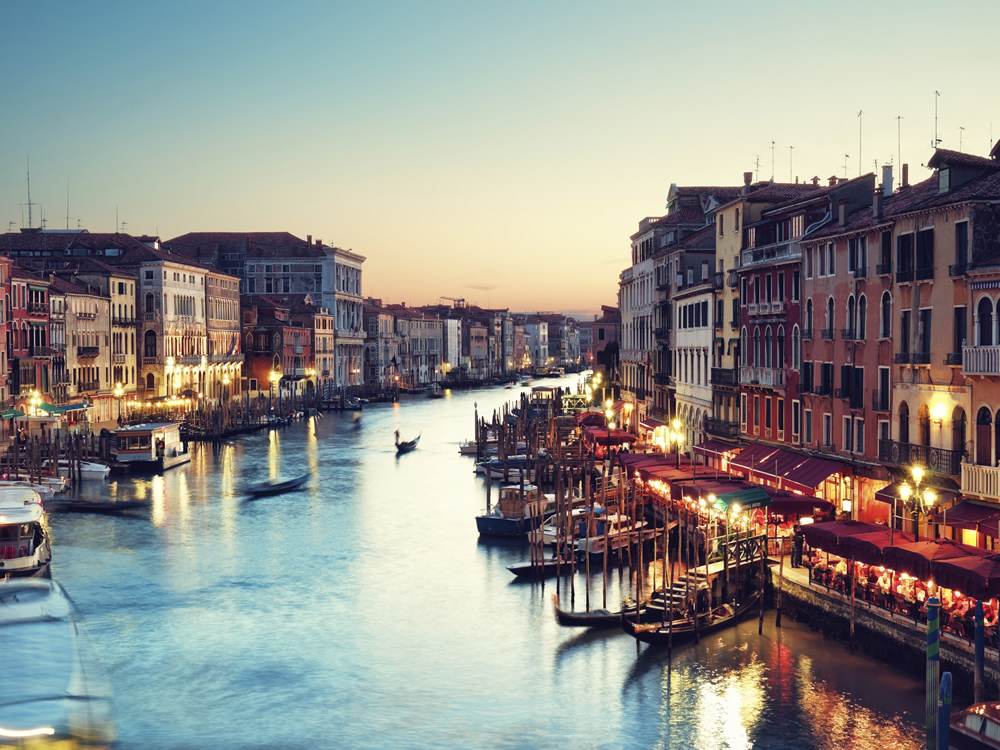
The Grand Canal is Venice’s main artery — a reverse-S shaped waterway approximately 3.8 kilometres long that divides the historic centre in two. Both banks are lined with Gothic, Renaissance and Baroque palaces built by Venice’s merchant families between the 12th and 18th centuries. The best way to see it is by boat: the vaporetto Line 1 is the budget option; a private boat gives you the freedom to stop, look and understand what you are seeing.
The Peggy Guggenheim Collection
The only major modern and contemporary art museum in Venice, housed in Peggy Guggenheim’s palazzo on the Grand Canal. The collection spans the major movements of 20th-century art — Cubism, Surrealism, Abstract Expressionism — with works by Picasso, Dalí, Kandinsky, Pollock and many others. The terrace overlooking the Grand Canal is one of the finest views in Venice.
What First-Time Visitors Often Get Wrong
Venice is not a difficult city to visit well — but it is a city where certain very common mistakes make the difference between a wonderful experience and a frustrating one.
| ✔ DO | ✘ DON’T |
| Book major monument tickets in advance | Arrive at St Mark’s or the Doge’s Palace without a booking |
| Start early — Venice is quietest before 10am | Sleep in and hit the major sights at midday |
| Eat at bacari near the Rialto or off the main routes | Eat at restaurants immediately next to St Mark’s Square |
| Buy a vaporetto day pass | Pay per journey — single tickets are very expensive |
| Wear comfortable walking shoes | Choose fashion over comfort — Venice is hard on feet |
| Allow time to simply sit and observe | Rush from sight to sight without pausing |
| Explore beyond San Marco into other sestieri | Spend the entire visit in a 500-metre radius of St Mark’s |
| Bring a reusable water bottle — tap water is safe and good | Buy expensive bottled water throughout the day |
| Book a guide for the major monuments | Rely only on audio guides in complex, layered buildings |
| Check acqua alta forecasts in autumn and winter | Arrive unprepared for high water — it does happen |
The Best Time of Year to Visit Venice for the First Time
Spring (April–June) is arguably the finest season for a first visit: mild temperatures, good light, the city in full flower. May and early June offer the best balance of pleasant weather and manageable crowds before the summer peak.
Summer (July–August) is Venice at its most intense — extraordinary light and long evenings, but also the highest visitor numbers and significant heat. If you visit in summer, start early, move slowly and retreat to air-conditioned spaces or the outer islands in the afternoon.
Autumn (September–October) is the season many Venice enthusiasts prefer: the light turns gold, the crowds begin to thin after the summer peak, and the city takes on a quieter, more contemplative mood. The Venice Film Festival (late August to early September) and the Regata Storica (first Sunday of September) add colour and atmosphere.
Winter (November–March) is Venice at its most authentic and its most literary. Fog, acqua alta and the grey light of the lagoon create an atmosphere that painters and writers have chased for centuries. The Carnival (February) is spectacular but extremely busy. Outside Carnival, winter Venice is intimate and extraordinary.
| There is no wrong time to visit Venice for the first time. Every season has its character and its rewards. The mistake is not in choosing the wrong season — it is in arriving without having thought about what you want from the experience. |
Why a Local Guide Makes All the Difference for a First Visit
Venice is one of those cities where the gap between the experience of a well-guided visitor and the experience of an unprepared self-guided visitor is unusually large. The reason is that Venice’s layers — historical, artistic, political, human — are not legible to the uninitiated. St Mark’s Basilica is visually overwhelming on first encounter, but without someone to explain what the mosaics depict, which objects came from Constantinople, and how the building itself evolved over nine centuries, it is very easy to walk out having felt something without understanding anything.
The same is true of the Doge’s Palace, of the great Venetian paintings, of the relationship between the urban fabric and the water that surrounds it. Venice rewards knowledge. A qualified local guide provides that knowledge — and, just as importantly, provides the personal connection to the city that transforms the experience from a sightseeing exercise into something genuinely memorable.
Venice Guide and Boat’s guided tours for first-time visitors are designed precisely around this reality. The itineraries cover the essential sights without becoming exhausting, include skip-the-line entry to the major monuments, and allow time for the kind of unhurried discovery that makes a first visit to Venice an experience people talk about for decades.
Tours designed for first-time visitors
- Highlights of Venice — the essential itinerary covering St Mark’s Basilica, the Doge’s Palace, the Rialto and a section of the Grand Canal, with skip-the-line entry and full expert commentary
- Unmissable Venice — a fuller version of the highlights tour with additional time in the quieter parts of the city
- Venice at a Glance — a shorter, more focused tour ideal for visitors with limited time
- Venice Secret Itineraries — for first-time visitors who want to go slightly beyond the main sights and discover some of the city’s less-visited corners
- Doge’s Palace and Basilica — a monument-focused tour with in-depth exploration of the two most important buildings on St Mark’s Square
- Bewitched by Venice — a longer, more immersive tour combining the historic highlights with a deeper exploration of the city’s character and atmosphere
| All tours for first-time visitors are private — your group, your guide, your pace. No strangers, no rushing, no compromises. Browse the full range in our Venice for the First Time section. |
Frequently Asked Questions
Is Venice easy to navigate for first-time visitors?
Venice is famously disorienting, and even experienced visitors get lost. The good news is that the historic centre is relatively compact — you can walk from the train station to St Mark’s Square in about 25–30 minutes on the main route, and most major sights are within walking distance of each other. GPS and apps like Google Maps work reasonably well in Venice, though the map can feel counterintuitive. The best approach for a first visit is either to join a guided tour or to invest time in studying a map before you arrive.
Do I need to speak Italian to visit Venice?
Not at all. Venice is one of the most internationally visited cities in the world, and English is widely spoken in hotels, restaurants and major attractions. That said, learning a few basic phrases in Italian — greetings, thanks, basic food vocabulary — is always appreciated and often repaid with warmth.
Is Venice safe for tourists?
Venice is one of the safest cities in Italy. The absence of cars removes the main source of urban danger, and the city has very low rates of violent crime. The main concern for visitors is pickpocketing in very crowded areas such as St Mark’s Square, the vaporetto and the Rialto Bridge — standard precautions (keeping bags in front, using inside pockets for valuables) are sufficient.
How much money do I need for a day in Venice?
Venice is an expensive city by Italian standards, but costs vary enormously depending on your choices. The biggest expenses are accommodation, monument entry (the Doge’s Palace and St Mark’s combined can cost €30–40 per person with skip-the-line booking), and food. Eating at bacari rather than tourist restaurants saves significant money without sacrificing quality. Tap water in Venice is clean and good — carrying a reusable bottle avoids the cost of bottled water throughout the day.
What should I wear in Venice?
Comfortable walking shoes are the single most important wardrobe decision. Venice involves walking on stone, crossing bridges and navigating sometimes narrow and uneven surfaces. High heels and thin-soled sandals are a mistake. Note also that entry to St Mark’s Basilica requires covered shoulders and knees — lightweight layers work well in all seasons.
Is Venice child-friendly?
Very much so. Children typically find Venice fascinating — the absence of cars, the boats, the bridges and the water make it feel genuinely different from any other city they have visited. Private guided tours can be tailored to include the kind of storytelling and detail that engages younger visitors, and the city’s campi (the open squares that function as Venice’s playgrounds) give children space to run around between sights.
Venice Rewards Those Who Arrive Ready
The visitors who leave Venice disappointed — and some do — are almost always those who arrived unprepared: who spent hours queuing for monuments they didn’t fully understand, who ate bad food next to St Mark’s Square, who got exhausted walking in circles with a map they couldn’t read, who left feeling that the reality didn’t quite match the image.
The visitors who leave Venice enchanted — and the great majority do — are those who arrived knowing something about what they were going to see, who moved through the city with some knowledge of where they were and why it mattered, and who gave themselves permission to slow down, sit in a campo, watch the water and let the place work on them.
Venice is not a city that rewards speed or efficiency. It rewards attention, curiosity and a willingness to be surprised. On a first visit, a good guide provides all three — and ensures that what could be an overwhelming experience becomes instead an unforgettable one.

