
Venice Guide and Boat
Venice for Foodies: The Complete Guide to Venetian Cuisine
Venetian cuisine is one of the most underestimated regional food traditions in Italy — overshadowed in the popular imagination by the pizza of Naples, the pasta of Bologna and the simplicity of Tuscan cooking, despite being arguably more distinctive than any of them. This is partly a problem of geography: Venice’s food culture is genuinely difficult to find if you eat in the wrong places, and the wrong places (the restaurants immediately surrounding St Mark’s Square and the Rialto Bridge) are where the overwhelming majority of visitors eat.
Venetian food is, in its essential character, the cuisine of a maritime trading empire — a cooking tradition shaped by a thousand years of contact with the eastern Mediterranean, the Middle East and Asia, layered onto the agricultural abundance of the Veneto mainland and the extraordinary seafood of the lagoon and the Adriatic. It uses spices that other Italian regional cuisines rarely touch (cinnamon, nutmeg, raisins, pine nuts — all legacies of the spice trade that made Venice rich). It treats rice as seriously as pasta. It has an entire culture built around small plates and standing-room wine bars that predates the global small-plates trend by five centuries. And it has, in cicchetti, one of the most genuinely satisfying ways to eat in the whole of Italy.
This guide is for visitors who want to eat Venice properly — who understand that the food is as essential to the experience of the city as the art and architecture, and who want to know what to order, where to order it, and why it tastes the way it does.
Why Venetian Food Is Different from the Rest of Italy
Venetian cuisine breaks several of the rules that define Italian cooking elsewhere in the country. Understanding why explains a great deal about what makes a meal in Venice distinctive.
Rice, not pasta
The Veneto is Italy’s principal rice-growing region, and risotto — not pasta — is the primary first course (primo) in traditional Venetian cooking. Risotto al nero di seppia (cuttlefish ink risotto), risi e bisi (rice and peas, traditionally served on April 25th for the feast of San Marco), risotto di gò (made with a small lagoon fish), and risotto all’Amarone (made with the great Valpolicella wine) are all distinctively Venetian dishes that have no real equivalent in central or southern Italian cooking.
Spice
Venice was, for centuries, the gateway through which spices from Asia entered Europe — and the city’s cooking retains an affection for spice that distinguishes it from almost every other Italian regional cuisine. Cinnamon, nutmeg, cloves and saffron appear in savoury Venetian dishes in ways that would be unusual in Tuscan or Roman cooking. The sweet-and-sour combination of raisins and pine nuts (uvetta e pinoli) — found in sarde in saor and other classic dishes — is a direct legacy of the medieval spice trade and the Arab and Byzantine culinary influences that Venice absorbed through centuries of Mediterranean commerce.
Polenta, not bread
Polenta — cornmeal porridge, served soft or grilled into firm slices — is the starch staple of Venetian and broader Veneto cooking, accompanying everything from baccalà to game to simple sautéed vegetables. Maize arrived in the Veneto from the Americas in the 16th century and was adopted with extraordinary speed; within a century, polenta had become the staple food of the Veneto peasantry and remains, to this day, deeply embedded in the region’s cooking.
Sweet and sour
The agrodolce (sweet-and-sour) flavour profile — typically achieved with vinegar, sugar or honey, and dried fruit — runs through Venetian cooking in a way that distinguishes it sharply from the rest of Italy. Sarde in saor (sweet-sour sardines), the use of raisins in savoury preparations, and the general Venetian fondness for combining acid and sweetness in the same dish all reflect culinary techniques absorbed from the eastern Mediterranean and Middle Eastern trading partners with whom Venice did business for centuries.
| Venetian cuisine is, in essence, the cooking of an empire — a tradition shaped not by the agricultural self-sufficiency of inland Italian regions but by a thousand years of maritime trade with the Byzantine world, the Ottoman Empire, the Levant and beyond. Every plate of risotto al nero di seppia, every bite of sarde in saor, carries that history. |
The Essential Venetian Dishes
The following are the dishes that define Venetian cooking — the ones worth specifically seeking out, and worth knowing what they are before you order them.
| Risotto al Nero di Seppia Cuttlefish ink risotto Risotto cooked with cuttlefish and its own ink, turning the dish a deep, glossy black. The flavour is intensely savoury, oceanic and slightly sweet from the cuttlefish meat. One of the most visually striking dishes in Italian cooking and a genuine Venetian classic. | Sarde in Saor Sweet-sour marinated sardines Fried sardines marinated in a sweet-sour mixture of vinegar, onions, raisins and pine nuts, traditionally left to rest for at least a day before eating. Originally developed by Venetian sailors as a preservation technique; now one of the most beloved cicchetti and antipasti in the city. |
| Baccalà Mantecato Whipped salt cod Dried salt cod, soaked and whipped with olive oil into a smooth, creamy emulsion — served on grilled polenta or bread. Light, intensely flavoured, and one of the most distinctively Venetian preparations of fish in Italian cooking. The defining cicchetto. | Bigoli in Salsa Wholewheat pasta with anchovy sauce Thick, rough-textured wholewheat spaghetti (bigoli) in a sauce of slow-cooked onions and anchovies, reduced until the anchovies dissolve into a deep umami paste. Traditionally a Lenten dish (meatless), now a staple of Venetian home and restaurant cooking year-round. |
| Fegato alla Veneziana Venetian-style calf’s liver Thinly sliced calf’s liver sautéed with a generous quantity of slow-cooked onions — a dish so associated with Venice that ‘Venetian-style liver’ is a standard menu item across Italy and beyond. Served with soft polenta. Rich, sweet from the onions, deeply savoury. | Risi e Bisi Rice and peas A thick, soupy risotto of rice and fresh peas, traditionally made with the season’s first spring peas and served on April 25th — the feast of San Marco, patron saint of Venice, and historically presented to the Doge as a ceremonial dish. Simple, vivid green, deeply comforting. |
| Moeche Fritte Fried soft-shell crab (seasonal) Tiny soft-shell crabs from the Venice Lagoon, available only for a few weeks in spring and autumn when the local crabs (moleche) shed their shells, dipped in egg and fried whole. One of the rarest and most prized seasonal delicacies in Italian cooking — crunchy, sweet, entirely unique. | Tiramisù The dessert that conquered the world Disputed origin (Treviso, in the Veneto, has the strongest historical claim), but undeniably a Veneto creation — coffee-soaked ladyfingers layered with mascarpone cream and cocoa. The Venetian and broader Veneto version, made with genuine ingredients rather than the diluted version found internationally, is worth seeking out specifically. |
Cicchetti: The Heart of Venetian Eating Culture
If Venetian cuisine has a defining cultural institution, it is cicchetti — the small bites of food served at the counter of a bacaro (traditional wine bar), eaten standing, accompanied by an ombra (a small glass of local wine). This is not merely a cheaper alternative to restaurant dining; it is the authentic way that Venetians have eaten for centuries, and it remains the most genuine and most rewarding food experience available in the city.
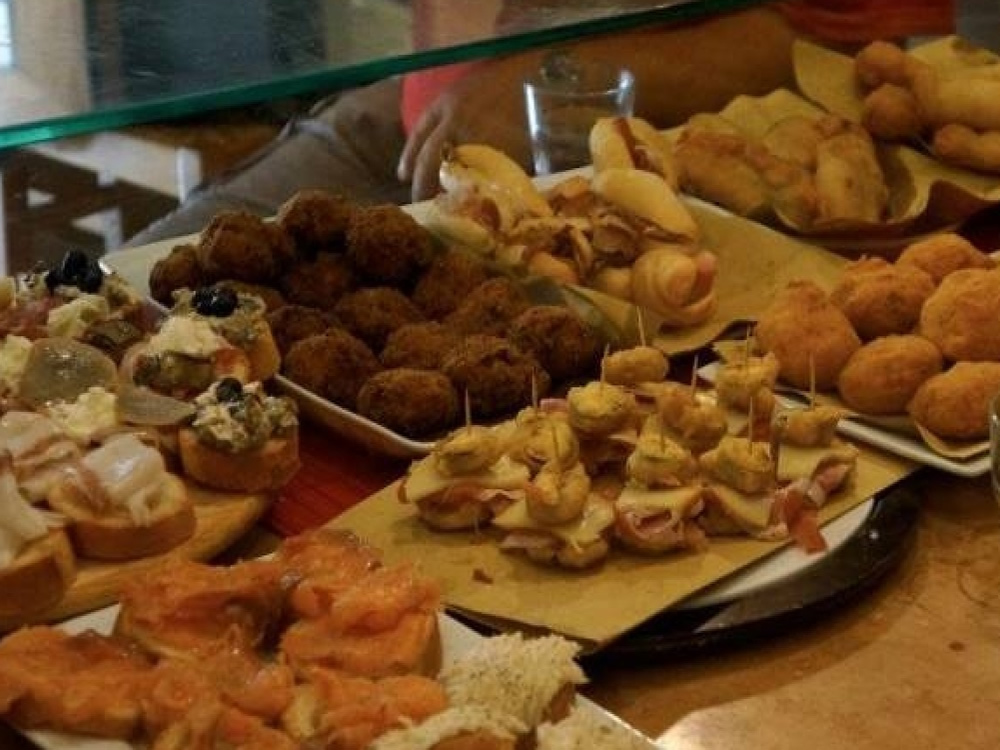
The cicchetti format works on a simple principle: small portions, displayed at the bar, allowing you to choose two, three or six different items and assemble your own meal. A typical cicchetti lunch — three or four small plates and two glasses of wine — costs €12–18 per person and constitutes one of the best value food experiences anywhere in Western Europe.
The cicchetti tradition is concentrated in specific areas of the city: the streets immediately around the Rialto Market (San Polo), the Fondamenta della Misericordia and degli Ormesini in Cannaregio, and scattered locations in the Dorsoduro near Campo Santa Margherita. The cicchetti experience is best at midday and in the early evening (before 7:30pm); after that, the best items have typically sold out and bacari shift towards being straightforward bars.
What to order at a bacaro
- Baccalà mantecato on a round of polenta or crostino — the single most essential cicchetto
- Polpette — small fried meatballs, usually beef or a mix of meats; every bacaro makes them slightly differently
- Folpetti — small boiled octopus, dressed with olive oil and lemon
- Sarde in saor on a crostino
- Crostini with seasonal toppings — anything from smoked fish to liver pâté to seasonal vegetables
- Mozzarella in carrozza — fried mozzarella sandwich, a simple but excellent option for those who want something more substantial
- Cheese or cured meat (formaggio, salumi) — usually from the Veneto mainland, served with a slice of bread
| The correct etiquette at a bacaro: order one or two cicchetti and a glass of wine, eat standing, ask for more as you finish. Do not sit (many bacari have no seating, and where seating exists it usually comes at a premium). Pay at the end, in cash if possible. The cicchetti are typically displayed on the counter, so you can point to what you want — extremely useful if your Italian is limited. |
Wine in Venice: What to Drink and Why
Venetian dining is inseparable from the wines of the Veneto mainland — the region surrounding the lagoon that has supplied Venice’s wine for as long as the city has existed. Understanding the basic landscape of Veneto wine significantly enhances the experience of eating in the city.
An ombra is the Venetian term for a small glass of wine — the standard accompaniment to cicchetti, traditionally Soave or another light white. The word derives from the practice of medieval wine sellers moving their stalls to follow the shade (ombra) of the Campanile in St Mark’s Square as the sun moved.
Spritz — Prosecco, Aperol or Select, and a splash of soda, served with an olive — is Venice’s signature aperitivo, drunk throughout the city from mid-afternoon onwards. The Select variant (using a Venetian-made bitter aperitif rather than the more internationally known Aperol) is considered the more authentic local choice.
Soave from the hills east of Verona is the classic pairing for Venice’s seafood-heavy cicchetti — dry, mineral, with a characteristic bitter-almond finish. The Classico zone produces serious, age-worthy examples that bear no resemblance to the diluted commercial Soave of decades past.
Prosecco from Conegliano-Valdobbiadene, the UNESCO-listed hill country north of Treviso, is Venice’s everyday sparkling wine — lighter and more food-friendly than Champagne, ideal with cicchetti and seafood.
Refosco and Raboso are the indigenous Veneto red grapes that pair best with the richer Venetian dishes — fegato alla veneziana, game, aged cheeses. Both are tannic, food-friendly reds that most international wine drinkers have never encountered, and both reward seeking out.
Where to Eat: A Guide by Category
The finest bacari for cicchetti
| Name | Area | What to Expect |
| All’Arco | San Polo, near Rialto | Widely considered the single finest cicchetti bar in Venice; exceptional quality, serious wine selection, tiny space, standing room only |
| Do Mori | San Polo, near Rialto | The oldest bacaro in Venice, operating since 1462; atmospheric, authentic, excellent francobolli (small crustless sandwiches) |
| Cantinone già Schiavi | Dorsoduro, near Accademia | Beloved neighbourhood institution with one of the most comprehensive Veneto wine lists by the glass in the city |
| Osteria al Squero | Dorsoduro, facing the gondola boatyard | Tiny bacaro with excellent cicchetti and natural wines; constantly full of locals at aperitivo time |
| Osteria dalla Vedova | Cannaregio, near Ca’ d’Oro | Over a century old; the polpette are considered by many Venetians the finest in the city |
Traditional trattorie for a sit-down meal
The finest traditional trattorias in Venice are, almost without exception, located away from St Mark’s Square and the Rialto Bridge — in the residential sestieri where the clientele is predominantly local. Indicators of a genuinely good traditional restaurant: a menu that changes seasonally or daily, fish described with its specific Adriatic provenance, a wine list focused on Veneto producers, and a lack of photographs or multiple-language menus posted outside. Cannaregio (particularly the area around the Fondamenta della Misericordia), the eastern Castello and the western Dorsoduro consistently offer better value and better cooking than the areas immediately surrounding the major monuments.
Fine dining
Venice’s fine dining scene, while smaller than Milan’s or Rome’s, includes several restaurants of genuine international quality — typically located in hotels along the Grand Canal or on the Giudecca, offering refined interpretations of Venetian and broader Italian cuisine. These restaurants are appropriate for a special occasion meal but represent a different category of experience from the cicchetti and trattoria culture that defines everyday Venetian eating, and reservations well in advance are essential.
The Venetian Food Calendar: Eating with the Seasons
Venetian cuisine is deeply tied to the seasonal rhythms of the lagoon and the Veneto mainland — a relationship made vivid every morning at the Rialto Market. Eating with the season is the single best way to experience Venetian food at its finest.
| Season | What to Eat |
| Spring | Moeche (soft-shell crab, brief season in April); risi e bisi with the first spring peas; castraure (baby artichokes from Sant’Erasmo island); white asparagus from Bassano; fresh fava beans |
| Summer | Zucchini flowers, stuffed or fried; sarde in saor at its peak; spaghetti alle vongole with lagoon clams; fresh figs and stone fruit; lighter, chilled antipasti |
| Autumn | Second moeche season (October); risotto with porcini mushrooms from the Dolomites; radicchio di Treviso, grilled or in risotto; game dishes begin to appear; new wine (vino novello) |
| Winter | Baccalà season at its richest; risotto al nero di seppia; bisato (eel) — traditionally eaten at Christmas; cotechino and lentils for New Year; hearty soups and braised dishes |
Dining Etiquette: What to Do and What to Avoid
| ✔ DO | ✘ DON’T |
| Eat where the menu changes seasonally | Eat anywhere with photographs of the food on the menu |
| Look for restaurants away from St Mark’s Square | Eat at the first restaurant you see near a major monument |
| Order cicchetti at a bacaro for lunch | Expect a full sit-down service at a wine bar |
| Ask for the local catch (“pesce dell’Adriatico”) | Order shrimp cocktail or generic “seafood platter” — usually a sign of low quality |
| Try moeche if you visit in April or October | Assume soft-shell crab is available year-round — it’s a brief seasonal delicacy |
| Drink the local Veneto wines | Default to international wines when excellent local options exist |
| Book ahead for any well-regarded restaurant | Expect to walk into a good restaurant without a reservation on a weekend evening |
| Tip modestly (5-10%) if service isn’t included | Over-tip — it’s not the norm in Italy and isn’t expected |
How Venice Guide and Boat Brings You Into the Food Culture
Understanding Venetian food is significantly enhanced by local expertise — knowing which bacari serve the morning’s freshest cicchetti, which restaurants are genuinely used by Venetians rather than tourists, and how to read a menu for the signs of quality and authenticity. Venice Guide and Boat’s food-focused experiences are designed around exactly this kind of insider knowledge.
- Business and Faith in Rialto — an early-morning guided visit to the Rialto Market (the pescheria and erberia), followed by a curated cicchetti and wine tasting at one of the area’s most authentic bacari, with full explanation of what you’re eating and why it matters
- Venice Boat Tour and Dinner — a private lagoon boat experience timed for sunset, followed by dinner at a restaurant on one of the outer islands, where the cooking reflects a genuinely local clientele
- Palladian Villas and Wine — a full-day excursion into the Veneto countryside, pairing Palladio’s architecture with tastings at serious Veneto wine producers (Prosecco, Soave, Amarone) and a lunch reflecting the mainland’s distinct culinary tradition
- Venice Intangible Heritage — explores the living craft and cultural traditions of Venice, including the food culture that sustains the city’s neighbourhoods beyond the tourist economy
| All Venice Guide and Boat food and wine experiences are private, led by guides with genuine local knowledge of where Venetians actually eat and drink. Contact us to discuss combining a food-focused tour with the rest of your Venice itinerary. |
Frequently Asked Questions
What is the most famous Venetian dish?
There is no single dish that dominates the way carbonara defines Roman cooking or ragù defines Bologna, but baccalà mantecato (whipped salt cod), sarde in saor (sweet-sour sardines) and risotto al nero di seppia (cuttlefish ink risotto) are the three dishes most strongly identified with Venice specifically. Cicchetti as a category — rather than any single dish — is probably the most distinctively Venetian food experience overall.
Is Venice expensive for food?
Venice has a reputation for expensive, poor-quality tourist food — and that reputation is accurate for the restaurants immediately surrounding St Mark’s Square and the Rialto Bridge. Move two streets away from the major monuments, and prices drop substantially while quality rises. A cicchetti lunch at a genuine bacaro costs €12–18 per person; a full trattoria dinner in a residential sestiere typically runs €30–45 per person for excellent traditional cooking — comparable to or cheaper than equivalent quality in most major European cities.
What should I avoid eating in Venice?
Avoid any restaurant with multilingual photo menus directly on St Mark’s Square or along the main route from the Rialto to St Mark’s — these almost universally serve mediocre, overpriced food aimed at one-time visitors who will never return. Generic ‘seafood platters’ and shrimp cocktail are reliable indicators of low-quality tourist-oriented kitchens. Pizza, while available everywhere, is not a Venetian specialty and is better sought elsewhere in Italy.
What is cicchetti and how do I order it?
Cicchetti are small bites of food served at the counter of a bacaro (Venetian wine bar), typically displayed so you can point to what you want. Order two or three items and a glass of wine (un’ombra), eat standing at the bar, and order more as you finish. It is the Venetian equivalent of tapas and the most authentic, best-value way to eat in the city.
Is moeche (soft-shell crab) really worth trying?
Yes, if your visit coincides with the brief seasonal window (a few weeks in April and again in October) when the lagoon’s small crabs shed their shells. Moeche fritte — the crabs dipped in egg and fried whole — are a genuine Venetian delicacy with no real equivalent elsewhere, and trying them is one of the more memorable food experiences a seasonal visitor to Venice can have.
Eating Venice Properly
The food of Venice tells the same story as its architecture and its art: a maritime trading empire absorbing influences from across the Mediterranean and beyond, transforming them through centuries of refinement into something distinctively its own. The spices in sarde in saor, the rice culture borrowed and perfected from the East, the polenta adopted with extraordinary speed from the New World, the wines of a mainland empire the city never stopped depending on — all of it tells the story of Venice as clearly as the mosaics of St Mark’s or the paintings of the Accademia.
Eating well in Venice requires only the willingness to walk a few streets away from the obvious, to order cicchetti standing at a bacaro counter rather than sitting at a tourist restaurant, and to trust the seasonal rhythms that have governed Venetian cooking for a thousand years. Do that, and the city’s food becomes one of the most rewarding dimensions of a visit — as essential to understanding Venice as any painting or palazzo.
| Ready to eat Venice properly? Join our Business and Faith in Rialto tour for an expert-guided morning at the market and a cicchetti tasting, or combine a lagoon sunset with dinner on one of the outer islands on our Venice Boat Tour and Dinner experience. |

