Venice Guide and Boat
Ca’ Rezzonico: A Complete Guide to Venice’s Most Intimate Museum and the World It Preserved
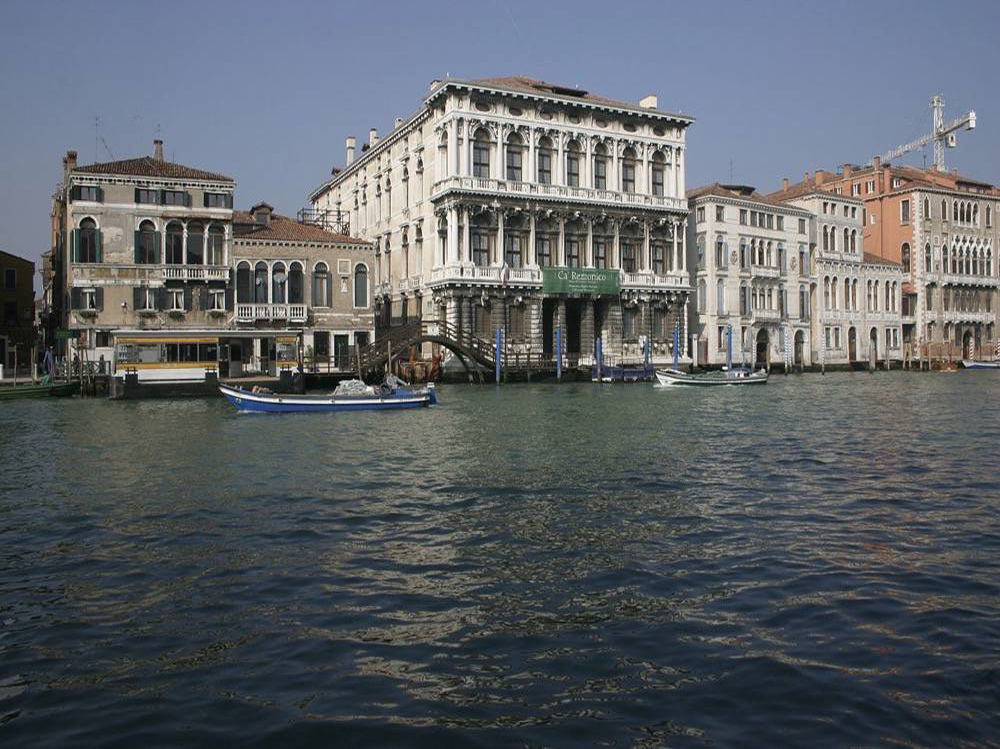
There is a museum in Venice that most visitors to the city never find. It sits on the Grand Canal in the Dorsoduro sestiere, three minutes’ walk from the Accademia and five minutes from the Peggy Guggenheim Collection. Its facade — one of the finest examples of Venetian Baroque architecture, begun by Baldassare Longhena and completed by Giorgio Massari — is large enough and beautiful enough that it appears in every aerial photograph of the Grand Canal. And yet it receives a fraction of the visitors that the Accademia sees, and a fraction of a fraction of the visitors that queue for the Doge’s Palace.
This is a significant error of navigation on the part of the travelling public — and one that this guide aims to correct.
Ca’ Rezzonico is the Museo del Settecento Veneziano: the Museum of 18th-Century Venice. It is housed in a palazzo that was, in the 18th century, one of the grandest private residences in the city — owned at various points by one of Venice’s most powerful noble families, by a pope’s nephew, and finally by Robert Browning’s son Pen, who died there in 1912. Its collection — assembled from the dispersed decorative arts of the Venetian aristocracy, the frescoes removed from demolished villas and palaces, and the paintings of the great 18th-century masters — constitutes the most vivid and complete portrait of Venetian life in its final, glittering, pre-Napoleonic century.
This guide covers the building, the collection, the world it depicts and the experience of visiting it — including what Venice Guide and Boat’s dedicated tour adds to that experience.
The Building: Three Centuries of a Palazzo’s Life
The Bon commission and Longhena’s design (1649–1682)
The palazzo was commissioned in 1649 by the Bon family — one of Venice’s ancient patrician dynasties — from Baldassare Longhena, the greatest Baroque architect of Venice and the designer of the Basilica di Santa Maria della Salute. Longhena’s design was monumental even by the standards of Grand Canal palazzo architecture: a three-storey facade in white Istrian stone, with the rusticated water entrance and ground-floor loggia of the traditional Venetian palazzo format combined with the heavier, more plastic decoration of the Baroque — swelling balconies, elaborate window surrounds, carved figures in the spandrels. The result was one of the most imposing private facades on the Grand Canal.
Longhena completed only the first two floors before his death in 1682. The Bon family, whose finances had been damaged by the ongoing wars with the Ottoman Empire that were draining Venice’s resources throughout the second half of the 17th century, could not afford to continue the construction. The unfinished palazzo stood as a monument to patrician ambition and financial strain for forty years.
The Rezzonico family and the palazzo’s completion (1750s)
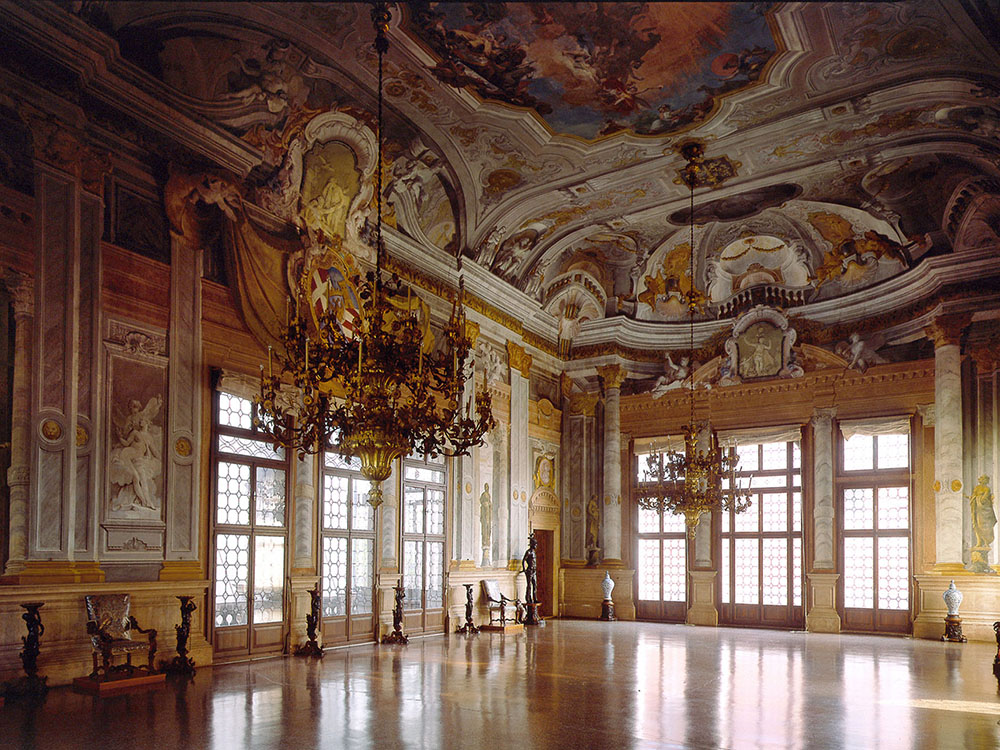
In 1750, the palazzo was purchased by the Rezzonico family — a Genoese banking dynasty that had purchased Venetian nobility in 1687 and was now one of the wealthiest families in the Republic. The Rezzonicos commissioned Giorgio Massari, the leading Venetian architect of the mid-18th century, to complete the building: to add the third floor that Longhena had designed but never built, and to create the extraordinary ballroom — the Sala da Ballo — that occupies the full width of the piano nobile and constitutes one of the most spectacular interior spaces in Venice.
The Rezzonicos also commissioned the interior decoration that makes Ca’ Rezzonico the visual document it is. Giambattista Tiepolo, the greatest decorative painter of the 18th century, painted the ceilings of the three most important rooms on the piano nobile between 1757 and 1758 — three allegorical programmes of extraordinary brilliance that represent his finest surviving work in a Venetian palazzo setting. The furniture was commissioned from the leading craftsmen of the period. The lacquerwork, the Murano glass chandeliers, the silk wall hangings were all of the first quality. The result was a palazzo that expressed, with complete clarity and conviction, the aesthetic aspirations of the Venetian aristocracy in its final generation of independent existence.
The 19th century and the Brownings
After the fall of the Republic in 1797 and the subsequent Austrian occupation, Ca’ Rezzonico passed through several owners. In 1888, it was purchased by the poet Robert Browning’s son Pen, who had it extensively restored and redecorated in a combination of genuine period pieces and Victorian additions. Robert Browning himself visited his son at Ca’ Rezzonico in 1889 and died there that same year — the last of the great English Romantic poets to die in Venice, a city that had been associated with the Romantics since Byron and Shelley had lived there seventy years earlier.
Pen Browning died at Ca’ Rezzonico in 1912. The palazzo passed to a series of owners before being purchased by the City of Venice in 1934 and converted into the museum it remains today.
| Ca’ Rezzonico is one of the very few palazzo museums in Venice where the building itself is as much the exhibit as the objects it contains. The proportions of the piano nobile rooms, the height of the ceilings, the relationship between the frescoes and the furniture — all of these require the original architectural setting to be fully comprehensible. You cannot understand a Tiepolo ceiling in a museum vitrine; you need to stand beneath it. |
The Collection: A Floor-by-Floor Guide
| Room / Area | Theme | Key Highlights |
| PIANO NOBILE (First Floor) — The Patrician Residence | ||
| Sala da Ballo | The Grand Ballroom | The largest room in the palazzo — designed by Massari to host the balls and musical entertainments that were central to Venetian aristocratic social life. The ceiling fresco by Crosato depicts allegorical figures. The chandeliers are original 18th-century Murano glass. |
| Sala dell’Allegoria Nuziale | Tiepolo’s Marriage Allegory | Tiepolo’s first ceiling for the palazzo — painted to celebrate the marriage of Ludovico Rezzonico to Faustina Savorgnan in 1758. The allegorical figures float in the sky with the characteristically effortless weightlessness of Tiepolo’s mature style. |
| Sala dei Pastelli | Pastel portraits | A room of pastel portraits by Rosalba Carriera — the Venetian pastelist who was the most fashionable portraitist in Europe in the early 18th century, and who brought the medium from France to Italy. Her portraits of Venetian nobility are among the finest examples of the Rococo portrait in existence. |
| Sala del Trono | Throne Room / Tiepolo ceiling | The most important room on the piano nobile — a ceiling fresco by Tiepolo depicting the Allegory of Nobility and Virtue, flanked by period furniture and tapestries that give an accurate sense of the appearance of a Venetian patrician reception room in the 1750s. |
| Sala dei Brustolon | Andrea Brustolon furniture | A room dedicated to the extraordinary carved furniture of Andrea Brustolon — the greatest Venetian woodcarver of the late 17th and early 18th century. His carved ebony and boxwood pieces, depicting figures of African and Chinese slaves supporting tables and candelabra, are the most virtuoso examples of Baroque furniture in the Veneto. |
| SECONDO PIANO (Second Floor) — The Picture Gallery and Decorative Arts | ||
| Portego | The picture gallery corridor | The long central corridor of the second floor holds an important collection of 18th-century Venetian paintings — works by Giambattista Pittoni, Giambattista Piazzetta, Rosalba Carriera, and others who defined the Venetian pictorial culture of the period. |
| Sala Luca Carlevarijs | Vedutismo — the art of the view | Named after Luca Carlevarijs, the painter who established the tradition of Venetian veduta painting that Canaletto would bring to its highest development. The room holds works by Carlevarijs and his contemporaries that document Venice in the early 18th century. |
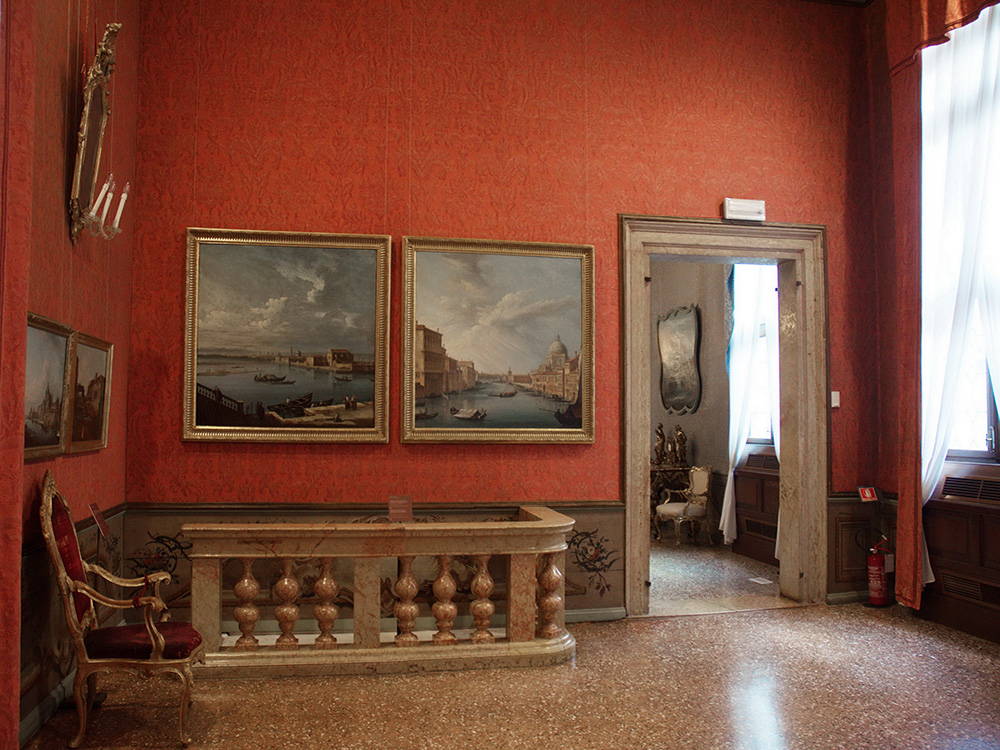
| Sala Canaletto | Canaletto views of Venice | The most frequently visited room in Ca’ Rezzonico — holding the only Canaletto paintings permanently on display in a Venetian public museum. The views of the Grand Canal and the lagoon demonstrate the extraordinary optical precision and compositional intelligence that made Canaletto the most sought-after painter of his era. |
| Sala Guardi / Longhi | Genre painting and society | A room of works by Francesco Guardi (Canaletto’s successor as the dominant vedutista of late 18th-century Venice) and Pietro Longhi, whose small genre scenes of Venetian daily life — the rhinoceros at a fair, the dancing lesson, the morning cup of chocolate — constitute the most direct documentary record of how ordinary Venetians lived and spent their time. |
| Camera degli Sposi | Giandomenico Tiepolo frescoes | The most extraordinary room in the museum — the frescoes removed from Giandomenico Tiepolo’s own villa at Zianigo, depicting scenes from the life of Pulcinella (the Commedia dell’Arte character) in a sequence of images that begin as comedy and end as something altogether more melancholy and disturbing. The most personal and psychologically complex work in the entire Tiepolo family’s output. |
| TERZO PIANO (Third Floor) — Craft Traditions and Popular Culture | ||
| Farmacia al Melograno | 18th-century pharmacy, reconstructed | A complete 18th-century Venetian apothecary, reconstructed from original fittings — rows of ceramic and glass vessels, wooden cabinets, and the instruments of the pharmaceutical trade as it was practised in Venice in the 1700s. |
| Sala dei Burattini | Puppet theatre | A collection of Venetian puppets and puppet theatre scenery from the 18th century — evidence of the popular theatrical culture that ran alongside the opera houses and the casinos as entertainment for the broader population of the city. |
| Pinacoteca Egidio Martini | Venetian painting collection | A substantial gift of Venetian paintings from the 14th to the 18th century, donated to the museum by the collector Egidio Martini — extending the chronological range of the collection beyond the 18th-century focus of the lower floors. |
The World Ca’ Rezzonico Depicts: 18th-Century Venice
Understanding Ca’ Rezzonico fully requires some understanding of the world it depicts — and the extraordinary, slightly desperate quality of that world. The Venice of the 18th century was a city in irreversible political and commercial decline. The Ottoman Empire had taken Cyprus in 1571, Crete in 1669 and the remaining Venetian possessions in the eastern Mediterranean in the subsequent decades. The Atlantic trade routes had long since displaced the Mediterranean ones that had been the foundation of Venetian wealth. The Republic’s population was declining, its territory shrinking and its treasury strained.
And yet Venice in the 18th century was simultaneously one of the most culturally brilliant and socially extraordinary cities in Europe — a place of theatre, music, gambling, Carnival and a freedom of behaviour that no other Italian city could match. The very loosening of the old certainties seems to have produced a cultural efflorescence: in opera (Venice had the highest concentration of opera houses in Europe), in instrumental music (Vivaldi wrote his Four Seasons here; the ospedali — institutions for orphaned girls — became the finest concert venues in Europe), in painting (Tiepolo, Canaletto, Guardi, Longhi), in literature (Goldoni’s comedies, Gozzi’s fairy-tale plays), in philosophy (the Venetian Enlightenment) and in the social spectacle of Carnival, which extended for months and during which the entire city wore masks that dissolved the normal boundaries of class and gender.
The people who populated this world were a distinctive cast — and Ca’ Rezzonico’s collection, through its portraits, its genre paintings and its decorative objects, gives a more complete picture of them than any other institution in Venice.
| The Figure | Role in 18th-Century Venice |
| The Venetian Patrician | Member of the hereditary nobility, eligible for the Great Council; increasingly squeezed by declining trade revenues and the costs of maintaining the social apparatus of aristocratic life; addicted to casino gambling and theatrical entertainment; patron of the arts as much from social obligation as from genuine taste |
| The Procurator’s Wife | A woman of the upper patriciate, whose social role was largely confined to the management of the household and the representation of her husband’s status; subjects of Rosalba Carriera’s extraordinary pastel portraits, which capture the intelligence and constraint of their lives simultaneously |
| The Ridotto Gambler | The ridotto — Venice’s state-licensed gambling house, housed in a palazzo near St Mark’s — was one of the defining social institutions of 18th-century Venice; attended by patricians, foreigners and, in mask, by people from every social class; the place where fortunes were won and lost and social distinctions temporarily suspended |
| Casanova | Giacomo Casanova (1725–1798) was born in Venice, educated in Padua, employed as a violin player and a spy, imprisoned in the Leads of the Doge’s Palace, escaped, travelled across Europe, returned to Venice, and ended his days as a librarian in Bohemia; the most famous product of 18th-century Venetian culture, whose memoirs give the most vivid available account of what the city’s social world actually felt like from the inside |
| The Grand Tour Visitor | Venice was the terminal point of the Grand Tour for British, German and French aristocrats completing their education in Italy; they came to see the art, the architecture and the social spectacle; they were painted by Canaletto and Rosalba Carriera; they bought glass, lace and paintings to take home; they attended the opera and the ridotto; many stayed much longer than they had planned |
| The Barnabotto | The impoverished patrician — a nobleman without resources, entitled by birth to full participation in the Republic’s governance but too poor to maintain the lifestyle his status required; Venice in the 18th century was full of them; they were a symptom of the Republic’s social calcification, unable to marry into wealth below their station and unable to generate income above it |
| Goldoni’s Characters | Carlo Goldoni (1707–1793) was the playwright who transformed Italian theatre by replacing the improvised Commedia dell’Arte with scripted, psychologically realistic comedy; his plays — The Servant of Two Masters, The Venetian Twins, La Locandiera — gave voice to the merchants, lawyers, servants and women of Venice in ways that the nobility-focused culture of the 17th century had not; they remain performed throughout the world |
| The Pulcinella | The Commedia dell’Arte character Pulcinella — hunchbacked, hook-nosed, white-costumed — was the dark heart of Venetian popular entertainment; Giandomenico Tiepolo’s late fresco cycle at Ca’ Rezzonico, depicting scenes from Pulcinella’s life, transforms the comedy figure into something more existentially complex: a portrait of mortality, repetition and the tragicomedy of human existence |
The Artists: Who Made 18th-Century Venice’s Visual Culture
Giambattista Tiepolo (1696–1770)
The greatest decorative painter of the 18th century and the last great master of the Venetian tradition. Tiepolo’s ceiling frescoes — at Ca’ Rezzonico, at the Würzburg Residenz in Germany, at the Royal Palace in Madrid — are the culmination of a decorative tradition stretching back through Veronese and Tintoretto to the Renaissance. What distinguishes Tiepolo from his predecessors is the quality of his light: his ceilings are luminous in a way that seems almost physically impossible, the sky they depict more convincingly radiant than any actual sky, the figures more weightless than any actual body. He was, in the judgment of most art historians, the finest ceiling painter who ever lived.
At Ca’ Rezzonico, Tiepolo‘s work is concentrated on the piano nobile: the Marriage Allegory in the Sala dell’Allegoria Nuziale, the Allegory of Merit between Nobility and Virtue in the Sala del Trono, and the Allegory of Strength and Wisdom in the adjacent room. These are not among his very greatest works — that title belongs to the Würzburg Residenz programme and the frescoes of the Villa Valmarana near Vicenza — but they are the finest surviving Tiepolo ceilings in a Venetian palazzo, and seeing them in their original architectural context is a very different experience from seeing reproductions.
Giandomenico Tiepolo (1727–1804)
The son of Giambattista, Giandomenico trained in his father’s workshop and developed a style that was simultaneously deeply indebted to the elder Tiepolo’s decorative brilliance and radically different in mood and subject matter. While Giambattista painted gods and allegories and mythological heroes in luminous, optimistic compositions, Giandomenico was drawn to the margins of Venetian society — the Commedia dell’Arte figures, the carnival crowds, the rural peasants of the Veneto mainland.
His masterpiece is the fresco cycle he painted for his own villa at Zianigo between 1757 and 1797 — now transferred to Ca’ Rezzonico and displayed in the Camera degli Sposi on the second floor. The cycle depicts scenes from the life of Pulcinella: the character’s birth, his education, his acrobatics, his courtship, his eating and drinking, his punishment, his death and resurrection. The paintings begin as comedy — the white-costumed Pulcinellas tumbling and feasting in groups — and end as something much more disturbing: a vision of humanity as a masked, repetitive, ultimately mortality-bound performance. These frescoes are among the most psychologically complex works in any Venetian museum, and they are among the least known.
| The Pulcinella frescoes are Giandomenico Tiepolo’s private statement about the human condition — made for himself, in his own house, without a patron. They were never intended for public display. In that sense, they are the most honest and unguarded works in the entire Tiepolo family’s output: what a great painter thinks when nobody is paying him to think otherwise. |
Canaletto (1697–1768)
Giovanni Antonio Canal, known as Canaletto, was the painter who made Venice legible to the rest of the world. His extraordinarily precise vedute — view paintings of the Grand Canal, the lagoon, the Piazza San Marco and the principal buildings of the Republic — were produced in large numbers for the foreign visitors and diplomats who purchased them as souvenirs of the Grand Tour. The majority of the finest Canaletto paintings are now in British collections — purchased by the English aristocrats who visited Venice in the 18th century and carried them home — which is why Ca’ Rezzonico, with its small but important Canaletto holdings, is one of the few places in Venice itself where his work can be seen in a public museum.
What distinguishes Canaletto from his contemporaries and successors is the combination of optical precision and compositional intelligence. His paintings are not simply accurate; they are beautiful in the way that the best architectural drawings are beautiful — the precision itself becoming a kind of aesthetic achievement. He used a camera obscura as an aid to proportion and perspective, and there is considerable scholarly debate about how extensively he used it; but the paintings themselves, whatever their technical origins, have a quality of seen reality that no mechanical process can explain.
Rosalba Carriera (1673–1757)
Rosalba Carriera is the most important female artist in the history of Venetian painting — and one of the most significant artists in the history of the pastel portrait anywhere in Europe. Born in Venice, she developed a technique of extraordinary sensitivity in the pastel medium, achieving effects of transparency and luminosity that had not previously been thought possible in the medium. By the 1720s, she was the most fashionable portraitist in Europe: elected to the Académie Royale in Paris in 1720, patronised by the courts of Vienna, Dresden and Warsaw, sought after by every Grand Tour visitor who passed through Venice.
Her pastel portraits — particularly those of the Venetian nobility displayed in the Sala dei Pastelli at Ca’ Rezzonico — capture a quality of social intelligence and psychological complexity that oil portraits of the period rarely achieve. The medium’s softness and luminosity is particularly suited to the faces of women who were both performing a social role and, behind the performance, entirely themselves: Carriera’s women look at you with an expression of calm assessment that is quite different from the deferential postures of most 18th-century portraiture.
Pietro Longhi (1701–1785)
Pietro Longhi is the documentary painter of 18th-century Venetian daily life — the artist who recorded, in a series of small, meticulously observed genre scenes, the activities and entertainments of a social world that no other artist thought worth painting. His subjects are the ordinary and extraordinary events of Venetian life: the rhinoceros displayed at a fairground, the morning cup of chocolate served to a noblewoman in her bedroom, the dancing lesson, the apothecary, the tailor, the dentist, the vendor selling trinkets on the street.
Longhi is not a great painter in the way that Titian or Tintoretto is great — his technique is modest and his compositions are sometimes awkward. But his value as a historical document is extraordinary. The Longhi paintings in Ca’ Rezzonico constitute the most detailed visual record of how Venetians of all classes actually lived in the 18th century — what they wore, what they ate, what they did for entertainment, how they occupied their time. They are the paintings that make the other paintings in the museum comprehensible: they show you the world that Tiepolo was decorating and Canaletto was memorialising.
| Pietro Longhi is the painter who answers the question that most visitors to 18th-century Venice want answered: what was it actually like? Not the ceremonial Venice of the official portraits and the allegorical ceilings, but the Venice of daily life — of shopping and gambling and chocolate-drinking and looking at rhinoceroses. His paintings are the footnotes that make the main text legible. |
Ca’ Rezzonico vs Other Venice Museums
| Ca’ Rezzonico | Other Major Venice Museums | |
| Focus | 18th-century Venice — decorative arts, painting, social history | Art (Accademia), politics (Doge’s Palace), modern art (Guggenheim) |
| Crowds | Significantly lower than the major monuments — even in peak season | Doge’s Palace and Accademia can be very crowded in summer |
| Building | An authentic Grand Canal palazzo — the rooms are the exhibit | Doge’s Palace: historic; Accademia: converted convent; Guggenheim: small palazzo |
| Unique feature | Tiepolo frescoes in situ; Canaletto in Venice; Longhi genre scenes | Varies by museum |
| Best for | History lovers, decorative arts, those interested in 18th-century culture | Art history (Accademia); Venetian government (Doge’s); modern art (Guggenheim) |
| Combination | Pairs beautifully with Accademia for a full day in Dorsoduro | The Accademia and Ca’ Rezzonico are 3 minutes apart on foot |
| The ideal Dorsoduro day: Accademia in the morning (two hours, with Venice Guide and Boat’s Venetian Painting tour), lunch at a bacaro near Campo Santa Margherita, Ca’ Rezzonico in the afternoon (ninety minutes to two hours). This covers the arc of Venetian painting from the 14th to the 18th century in two institutions that are three minutes apart — with the social world that the painting was made for visible at Ca’ Rezzonico in the afternoon. |
The Venetian Palace Tour with Venice Guide and Boat
Venice Guide and Boat’s A Venetian Palace tour is a dedicated, expert-led exploration of Ca’ Rezzonico, designed to make the collection fully comprehensible for visitors who want to go beyond the surface. The tour is conducted by a specialist guide with deep knowledge of 18th-century Venetian art, social history and decorative arts.
The tour is structured around the question that the museum itself poses but rarely answers: what was 18th-century Venice actually like? What did it feel like to live in this world of masks and music and gambling and declining power? The collection — if approached with the right knowledge — provides extraordinary answers to this question, and the guide’s role is to make those answers visible.
What the tour covers
- The history of the palazzo — from Longhena’s original commission through the Rezzonico ownership, the Browning connection and the museum’s formation
- Giambattista Tiepolo’s ceiling frescoes on the piano nobile — their allegorical programmes, their technical achievement and their place in the Tiepolo family’s larger body of work
- The social world of 18th-century Venice — Carnival, the ridotto, the opera, the ospedali, the Commedia dell’Arte — visible through the paintings and decorative objects of the collection
- Rosalba Carriera’s pastel portraits and their extraordinary achievement in psychological intimacy
- The Canaletto room and the tradition of veduta painting — why Canaletto’s paintings of Venice ended up predominantly in British collections
- Pietro Longhi’s genre scenes as documentary evidence of Venetian daily life
- Giandomenico Tiepolo’s Pulcinella frescoes — the most psychologically complex works in the museum, and the most personal statement in the entire Tiepolo family’s output
- The decorative arts — Brustolon’s carved furniture, Murano glass, lacquerwork, the reconstructed pharmacy — as evidence of the material culture of Venetian aristocratic life
| The A Venetian Palace tour can be combined with the Venetian Painting tour of the Accademia Galleries for a comprehensive full-day programme in the Dorsoduro. Together, the two tours cover the full arc of Venetian artistic production from the 14th to the 18th century — from Bellini’s luminous sacra conversazioni to Tiepolo’s theatrical ceilings — in the two institutions that hold the finest examples of each. |
Practical Information
| Address | Fondamenta Rezzonico 3136, Dorsoduro — on the south bank of the Grand Canal, adjacent to the Ca’ Rezzonico vaporetto stop |
| Opening hours | Wednesday–Monday: 10:00am–5:00pm (last entry 4:00pm). Closed Tuesdays and certain public holidays. Extended summer hours apply (check official website for current schedule). |
| Admission | Full price: €10. Reduced: €7.50. Free: children under 6, disabled visitors. Combined Venice Museums ticket (Palazzo Ducale, Correr, Ca’ Rezzonico, Ca’ Pesaro) available and recommended. |
| Booking | Walk-up entry is generally possible except during peak summer season. Online booking available via the official Venice Museums website. |
| Duration | A minimum of 60–75 minutes for the essential rooms. A thorough visit, including all three floors, takes 90–120 minutes. Guided tour with Venice Guide and Boat: 90 minutes. |
| Getting there | Vaporetto: Ca’ Rezzonico stop (line 1) — the museum entrance is a 2-minute walk from the landing stage. On foot: 3 minutes from the Accademia Galleries; 10 minutes from St Mark’s Square. |
| Photography | Permitted without flash throughout. Tripods not permitted. |
| Accessibility | The palazzo has a lift serving all floors. The building is largely accessible to wheelchairs, with some minor level changes in the historic rooms. |
| Grand Canal view | The Grand Canal terrace accessible from the portego on the piano nobile offers one of the finest views of the canal in Venice — and the best vantage point for understanding the relationship between the palazzo’s facade and the waterway it commands. |
Frequently Asked Questions
Is Ca’ Rezzonico worth visiting if I’ve already been to the major monuments?
Emphatically yes — and it offers something the major monuments cannot: an intimate, unhurried, socially specific portrait of Venice in the period immediately before the Republic’s end. The Doge’s Palace tells the story of Venetian political power; the Accademia tells the story of Venetian painting; Ca’ Rezzonico tells the story of Venetian life — what it looked and felt and sounded like to be a person of wealth and position in the most theatrical city in 18th-century Europe. These are complementary stories, not alternatives.
How long does Ca’ Rezzonico take to visit?
A thorough visit to all three floors takes approximately 90 to 120 minutes. The essential rooms — the piano nobile with Tiepolo’s ceilings, the Sala dei Pastelli, the Canaletto room, the Longhi room, and the Pulcinella frescoes — can be covered in 60 to 75 minutes. Most visitors find that 90 minutes is the optimal duration: enough time to see everything important without exhaustion.
What is the single most important thing to see at Ca’ Rezzonico?
If forced to choose one work, the Pulcinella fresco cycle by Giandomenico Tiepolo — displayed in the Camera degli Sposi on the second floor — is the most extraordinary and the least expected. In the context of what surrounds it (the grandeur of the piano nobile, the social precision of the Longhi paintings, the luminosity of the Canaletto views), these melancholy, personal, slightly uncanny images of a white-costumed Pulcinella moving through the stages of a life that may not be entirely different from our own are one of the genuinely surprising artistic experiences in Venice.
Why is Canaletto important, and why is his work in Venice rather than in England?
Most of Canaletto’s finest paintings are in British collections — at the Royal Collection, at Windsor Castle, at Woburn Abbey and dozens of other country houses — because his primary market during his lifetime was the British Grand Tour visitor who purchased his views of Venice as souvenirs. He even spent a decade in England (1746–1756) painting English subjects for English patrons. The result is that Venice, the city he is most identified with, has relatively little of his work in public collections. Ca’ Rezzonico’s Canaletto holdings are therefore among the most important in the city itself, and seeing them in a Venetian palazzo museum — close to the actual views they depict — adds a dimension that British museum collections, however fine, cannot provide.
Who was Robert Browning and what is his connection to Ca’ Rezzonico?
Robert Browning (1812–1889) was one of the greatest English poets of the Victorian era — the author of ‘My Last Duchess’, ‘Fra Lippo Lippi’, ‘The Ring and the Book’ and many other major works. His son Pen (Penini) purchased Ca’ Rezzonico in 1888 and undertook a major restoration of the building. Robert Browning visited his son there in 1889 and died in the palazzo in December of that year — the last of the great English Romantic-era poets to die in Venice. A plaque on the facade of the building commemorates his death there. The connection between Ca’ Rezzonico and the Brownings is one of the more poignant threads in the palazzo’s long history, and it is one that Venice Guide and Boat’s tour explores in its account of the building’s 19th-century life.
The Venice That No Longer Exists — Preserved Here
Ca’ Rezzonico is, in a very precise sense, a museum of a world that ended on 12 May 1797, when the last Doge of Venice, Lodovico Manin, abdicated in the face of Napoleon’s armies and the Most Serene Republic of Venice — which had governed itself as an independent state for more than a thousand years — ceased to exist.
The world that the museum preserves was not aware of its own ending. Tiepolo painted his ceilings in the 1750s, Canaletto recorded his views in the 1730s and 1740s, Longhi documented his social scenes in the 1750s and 1760s — all of them working in a city that seemed, for all its visible decline, as permanent and self-renewing as it had always been. The Carnival continued, the opera houses filled, the ridotto remained busy, the Rezzonico family celebrated its new palazzo with balls and entertainments that seemed designed to last forever.
Forty years later, it was over. The Rezzonicos, like the Republic itself, would not survive the Napoleonic transformation of Europe. The palazzo passed from owner to owner, the collection dispersed, the frescoes were removed from the villas that could no longer be maintained and transferred to a museum that would preserve them for a public that could not have been imagined by the people who made them.
Walking through Ca’ Rezzonico — through the Tiepolo rooms, past the Longhi scenes, past the Carriera pastels, past the Canaletto views — is the experience of walking through a world that knew how to live brilliantly and completely, without knowing that it was about to disappear. That quality — of brilliance and unknowing, of a civilisation at the height of its social and artistic achievement at the moment before its end — is what makes Ca’ Rezzonico unlike any other museum in Venice, and unlike almost any other museum anywhere.
| Book the A Venetian Palace tour with Venice Guide and Boat — a private, expert-led exploration of Ca’ Rezzonico, covering the Tiepolo ceilings, the Canaletto and Longhi rooms, the Pulcinella frescoes and the social world of 18th-century Venice with a specialist guide. Available in combination with the Accademia Venetian Painting tour for a full Dorsoduro day. |

