
Venice Guide and Boat
The Accademia Galleries, Venice: A Complete Guide to the World’s Greatest Collection of Venetian Painting
There are two kinds of visitors to Venice. The first goes to the Doge’s Palace and St Mark’s Basilica, queues, marvels, photographs, and moves on. The second goes to the Gallerie dell’Accademia.
This is not a complaint about the first kind of visitor — the Doge’s Palace and St Mark’s are extraordinary, and the queues are worth enduring. But the Accademia is the place where the deepest encounter with Venetian civilisation is available: two floors of galleries holding the most comprehensive survey of Venetian painting in existence, from the gold-ground devotional panels of the 14th century to the sweeping historical canvases of the 18th, covering four centuries of one of the most distinctive and influential artistic traditions in European history.
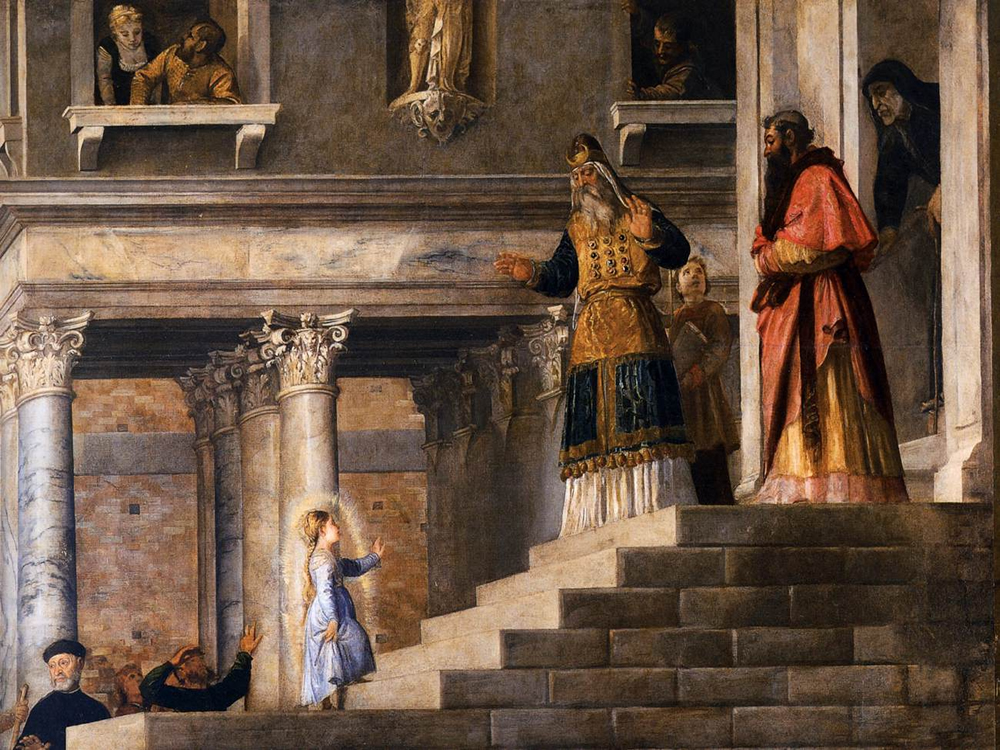
It is also, consistently, less crowded than the Doge’s Palace — which means that visitors who go there can look at paintings in a way that the city’s most famous monuments do not always permit. They can stand in front of Titian’s Presentation of the Virgin for as long as they want. They can sit in the great hall of the Sala dell’Albergo and let Tintoretto’s Paradise (the smaller version he made as the modello for the enormous canvas in the Doge’s Palace) work on them slowly. They can find the Giorgione room and spend twenty minutes with the Tempest — one of the most mysterious paintings in Western art — without being pushed aside by a tour group.
This guide is for both kinds of visitor: the first-timer who wants to know where to begin, and the returning visitor who wants to go deeper. It covers the collection’s history, its organisation, its masterpieces, the artists who matter most and why — and what a guided visit with Venice Guide and Boat adds to the experience.
The History of the Collection
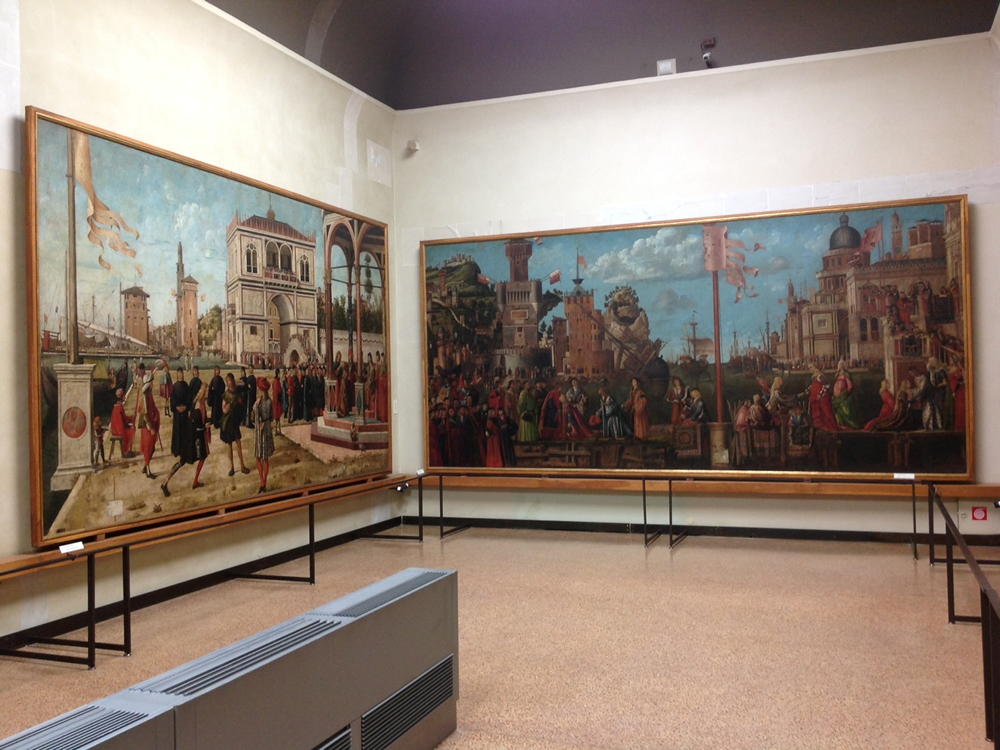
The Gallerie dell’Accademia occupies a complex of buildings on the southern bank of the Grand Canal in the Dorsoduro sestiere: the former church of Santa Maria della Carità, the scuola (confraternity building) of the same name, and the former monastery of the Lateran Canons, designed in part by Palladio. The collection was established here in 1807, when Napoleon’s administration — in its systematic reorganisation of Venice’s institutions — transferred the holdings of the city’s suppressed religious institutions and the Academy of Fine Arts to a single public gallery.
The founding collection was, therefore, not assembled by individual taste or institutional purchase in the conventional museum sense. It was the accumulation of objects removed from the churches, scuole, convents and palaces of Venice during the Napoleonic suppressions — paintings that had been made for specific architectural settings, for specific liturgical purposes, for specific devotional or commemorative functions, and that found themselves gathered together in a secular museum context that was entirely foreign to their origins.
This history gives the Accademia a character distinct from most other major art museums. The majority of its holdings were not made to be looked at in a gallery. They were made to hang above altars, to decorate the walls of meeting rooms, to fill the apses of churches, to serve as votive offerings. Understanding this context — what a painting was made for, who commissioned it and why, what function it performed in its original setting — is one of the principal pleasures that a knowledgeable guide brings to a visit.
The collection has grown substantially since its founding, through purchase, donation and the transfer of additional works from churches and institutions across Venice. It now holds approximately 800 works displayed across 24 rooms, with several thousand additional works in storage. The permanent display represents only a fraction of the total holdings — but it is the most important fraction, and it constitutes an education in Venetian painting that no other institution in the world can provide.
| The Accademia is not a conventional museum in the sense of a neutral space for the display of objects collected for their aesthetic or historical value. It is a rescue operation — the beneficiary of the greatest cultural disruption Venice has experienced since the fall of the Republic. Understanding this history makes the collection richer, not poorer. |
The Artists: A Reference Guide
| Artist | Dates | Significance in the Collection |
| Paolo Veneziano | Active c. 1310–1360 | The founder of the Venetian painting tradition; his polyptychs establish the Byzantine-inflected style from which the entire subsequent tradition develops |
| Giovanni Bellini | c. 1430–1516 | The master who transformed Venetian painting from Byzantine formalism to Renaissance luminosity; the Accademia holds his finest surviving altarpieces |
| Vittore Carpaccio | c. 1465–1525/6 | The great narrative painter of late 15th-century Venice; his cycle of the Legend of Saint Ursula is the most complete and best-preserved narrative cycle in the collection |
| Giorgione | c. 1477/8–1510 | The most mysterious figure in Venetian painting; the Tempest — his greatest surviving work — has defied interpretation for five centuries |
| Titian | c. 1488/90–1576 | The dominant figure of the Venetian Renaissance; the Accademia holds the Presentation of the Virgin, his masterpiece of narrative composition on a monumental scale |
| Lorenzo Lotto | c. 1480–1556/7 | The most psychologically penetrating portraitist of the Venetian Renaissance; his portraits in the Accademia reveal an interiority that Titian’s rarely achieve |
| Paolo Veronese | 1528–1588 | The master of pageant and colour; the Feast in the House of Levi — originally painted as a Last Supper — is one of the largest and most spectacular paintings in the collection |
| Jacopo Tintoretto | 1518–1594 | The most formally audacious of the great Venetians; his cycle of Miracles of Saint Mark represents his most sustained and theatrically extraordinary achievement |
| Jacopo Bassano | c. 1510–1592 | The great provincial master of the Veneto; his pastoral scenes and night-lit religious subjects represent a dimension of 16th-century Venetian painting rarely encountered elsewhere |
| Giovanni Tiepolo | 1696–1770 | The last great master of the Venetian decorative tradition; his ceiling designs and oil sketches in the Accademia demonstrate the brilliance of the 18th-century culmination |
The Masterpieces: Ten Works You Must Not Miss
| Tempest Giorgione c. 1506–1508 · Room 5 The most discussed painting in Venice — a young man, a nursing woman, a city, a storm breaking over the landscape. Nobody has ever satisfactorily explained what it depicts. It is the first European painting in which landscape is not a backdrop but the subject itself. | Presentation of the Virgin at the Temple Titian 1534–1538 · Room 24 (Sala dell’Albergo) Titian’s largest surviving narrative painting, made for this very room and still hanging in its original position — the only work in the Accademia that has never left the building in which it was painted. The young Virgin ascending the temple stairs is one of the great passages in Italian painting. |
| Feast in the House of LeviPaolo Veronese 1573 · Room 10 A canvas of extraordinary scale (5.5 x 13 metres) originally commissioned as a Last Supper for the refectory of Santi Giovanni e Paolo. When the Inquisition objected to the presence of dwarfs, buffoons and dogs in a religious scene, Veronese’s brilliant response was to rename it a different biblical feast. | Saint Mark Freeing a Slave Jacopo Tintoretto 1548 · Room 10 The painting that made Tintoretto’s reputation, completed when he was thirty. Saint Mark plunges headfirst from the sky towards a slave whose executioners’ instruments are miraculously breaking. The foreshortening is violent, the colour explosive, the composition unlike anything seen before. |
| San Giobbe Altarpiece Giovanni Bellini c. 1487 · Room 2 Bellini’s most complete surviving sacra conversazione — the Virgin enthroned with saints in an architectural setting that creates an illusion of depth and light unachieved in Venetian painting before this date. The musical angels at the base of the throne are among the most luminous passages in Italian Renaissance painting. | Legend of Saint Ursula (cycle) Vittore Carpaccio 1490–1495 · Room 21 Eight large narrative panels telling the story of the British princess Ursula and the Breton prince Heraeus — a story of diplomatic negotiation, pilgrimage, martyrdom and dream. The most complete secular narrative cycle in the Accademia, and the finest expression of Carpaccio’s extraordinary gift for architectural detail and costume. |
| La Vecchia (Portrait of an Old Woman) Giorgione (attr.) / Titian c. 1506 · Room 5 An old woman holding a scroll reading ‘Col tempo’ (with time) — one of the most unsettling and honest portrait images in early Renaissance painting. Whether by Giorgione or the young Titian, it represents a moment when Venetian painting looked unflinchingly at age, decay and mortality. | Pietà Titian c. 1575–1576 · Room 5 Titian’s last painting, left unfinished at his death from plague in 1576 and completed by Palma il Giovane. The niche with its golden mosaic, the monumental figures of the mourners, the candle burning at the lower left — and Titian’s own self-portrait as the kneeling Nicodemus — make this one of the most emotionally charged works in the collection. |
| Portrait of a Young Man in his Study Lorenzo Lotto c. 1528 · Room 7 A young man looks up from his books with an expression of arrested thought — the most psychologically immediate portrait in the Accademia. The objects on the desk (letters, a lizard, rose petals) have been interpreted as symbols of mortality and melancholy; whatever their meaning, the painting achieves an intimacy that few contemporary portraits match. | Coronation of the Virgin (Polyptych)aolo Veneziano c. 1325 · Room 1 The founding work of the collection — the earliest major panel painting in the Accademia, and the most complete expression of the Byzantine-inflected style that characterises 14th-century Venetian painting. The gold ground, the flattened figures, the hierarchical composition: everything from which the next two centuries of Venetian art would depart. |
Room by Room: A Guide to the Collection
The Accademia’s rooms are arranged roughly chronologically, beginning with the 14th century in Room 1 and ending with the 18th century in the final galleries. The following is a selective guide to the most important rooms, with the key works to prioritise in each.
| Room | Period / Theme | Key Works |
| 1 | 14th-century Venetian painting | Paolo Veneziano’s Coronation of the Virgin Polyptych; Lorenzo Veneziano’s Lion Polyptych |
| 2 | Early Renaissance altarpieces | Giovanni Bellini’s San Giobbe Altarpiece; Carpaccio’s Presentation of Christ in the Temple; Cima da Conegliano’s Incredulity of Saint Thomas |
| 4 | 15th-century masters | Mantegna’s Saint George; Piero della Francesca’s Saint Jerome; Giovanni Bellini’s Madonna and Child works |
| 5 | Giorgione and the High Renaissance | Giorgione’s Tempest; La Vecchia (Col Tempo); Titian’s Pietà (Room 5a); early Titian portraits |
| 6 | Titian | Major Titian canvases; John the Baptist; Portrait works demonstrating his development as a portraitist |
| 7 | Lorenzo Lotto | Portrait of a Young Man in his Study; Portrait of a Gentleman in Three Positions |
| 10 | Tintoretto and Veronese | Tintoretto’s Miracles of Saint Mark trilogy; Veronese’s Feast in the House of Levi; Tintoretto’s Transportation of the Body of Saint Mark |
| 11 | 16th-century masters | Jacopo Bassano; Palma il Vecchio; Bonifacio de’ Pitati; Paris Bordone’s Fisherman Presenting the Ring |
| 20 | Late Gothic cycles | Gentile Bellini and workshop’s Miracles of the Relic of the Cross (eight large canvases — the greatest documentary record of 15th-century Venice in existence) |
| 21 | Carpaccio’s Saint Ursula cycle | The eight narrative panels of the Legend of Saint Ursula — the most complete and best-preserved narrative cycle in the collection |
| 23–24 | Sala dell’Albergo / culmination | Titian’s Presentation of the Virgin (in situ, its original location); Tintoretto’s modello for Paradise |
The Venetian School: What Makes It Different
The Venetian school of painting is not simply the painting that happened to be produced in Venice. It is a coherent tradition with distinctive technical, formal and philosophical characteristics that set it apart from every other Italian regional school — and that make it, for many art historians and lovers of painting, the most continuously rewarding tradition in Western art.
The key distinction is colour. Where the Florentine tradition — from Giotto through Masaccio to Michelangelo — prioritised line, structure and the primacy of drawing (disegno), the Venetian tradition prioritised colour, atmosphere and the primacy of painting itself (colorito). This was not merely a stylistic preference; it reflected a fundamentally different understanding of what painting was for and what it could do.
The Venetians discovered oil painting — or at least its full possibilities — before their Florentine contemporaries, through contact with Flemish traders who brought northern European panel paintings to the city in the early 15th century. Oil paint could be built up in translucent layers (glazes), creating a luminous, atmospheric quality entirely different from the flat, opaque surface of tempera. This discovery transformed Venetian painting: Giovanni Bellini’s late altarpieces, which seem to glow from within, achieve effects that would have been technically impossible in tempera.
The luminosity of oil paint also allowed Venetian painters to capture the particular quality of light in their city — the diffused, water-reflected light that makes Venice visually unlike any other place — in ways that their Florentine contemporaries, working in a different optical environment, had no reason to develop. This relationship between technique and environment is one of the deepest and most interesting aspects of the Venetian tradition, and it is visible throughout the Accademia collection.
The problem of Giorgione
No account of the Accademia’s collection can avoid the central interpretive challenge that has preoccupied scholars for five centuries: the problem of Giorgione. Of the approximately 200 paintings that were attributed to Giorgione by his contemporaries and near-contemporaries, only five or six are now universally accepted. The rest have been redistributed, through centuries of scholarship, to other hands — most frequently to the young Titian, with whom Giorgione worked closely in the years before his early death from plague in 1510.
The Tempest, La Vecchia and the Three Philosophers in Vienna are the touchstones of the Giorgione problem — paintings whose authorship, subject and meaning remain contested despite centuries of attention. What is certain is that Giorgione was the most radical innovator in early 16th-century Venetian painting: the first artist to make landscape not a backdrop but an expressive subject in its own right, and the first to allow the mood of a painting to be its primary content rather than its narrative or devotional function. Standing in front of the Tempest in Room 5, the question of who painted it matters less than what it does — which is something that no painting made before it quite managed.
| The Tempest is a painting about atmosphere — not in the metaphorical sense, but in the literal one. The storm gathering over the city, the quality of the light before lightning strikes, the feeling of suspended time: Giorgione understood, perhaps for the first time in Western painting, that the weather could be the subject of a picture. |
Titian’s Presentation: the painting that stayed
Among all the works in the Accademia collection, the Presentation of the Virgin at the Temple in Room 24 has a particular status: it is the only major painting in the museum that has never left the building in which it was painted. Titian made it between 1534 and 1538 for the Sala dell’Albergo of the Scuola Grande di Santa Maria della Carità — the very room in which it still hangs. When the Scuola became part of the Accademia complex in the 19th century, the painting came with the building.
This matters because it means the Presentation can be seen as Titian intended it to be seen: in the room for which it was designed, at the scale he had in mind, in the relationship to the windows and the architectural surfaces that he calculated. Most great paintings are seen in circumstances quite different from those for which they were made. The Presentation of the Virgin is the rare exception — and the difference is perceptible. The painting fits its room in a way that no reproduction, however good, can communicate.
The Miracles of the Relic: a documentary record
Room 20 of the Accademia holds one of the most remarkable documentary resources in the history of art: a series of eight large canvases painted between the 1490s and the 1520s by Gentile Bellini, Carpaccio and others, depicting miracles associated with a relic of the True Cross held by the Scuola Grande di San Giovanni Evangelista. The paintings are extraordinary as paintings — but they are equally extraordinary as documents. They depict Venice itself: the Grand Canal, the Rialto area before the current bridge was built, the Piazza San Marco before numerous later modifications, the costumes and social life of the late 15th century. For historians of Venice, they are the most detailed and reliable visual record of the city at this period in existence.
The Accademia vs Other Venice Museums: An Honest Comparison
First-time visitors to Venice frequently ask which of the city’s major museums to prioritise. The honest answer depends on what you are looking for — but a clear-eyed comparison is useful.
- The Doge’s Palace is the most historically dramatic museum in Venice — a building of extraordinary importance, decorated by the greatest Venetian painters, that tells the political story of the Republic with immediacy and grandeur. It is more crowded than the Accademia and requires a guide to be fully intelligible. Essential for first-time visitors.
- The Accademia is the finest museum for painting in Venice — the place where the development of the Venetian artistic tradition can be followed over four centuries, and where the greatest individual paintings in the city can be seen in relative calm. Slightly less crowded than the Doge’s Palace. Essential for anyone with a serious interest in art.
- Ca’ Rezzonico is the finest museum for 18th-century Venice — decorative arts, ceiling frescoes, period furniture and Canaletto views in an authentic palazzo setting. Less well known than the Accademia, significantly less crowded, and extraordinarily evocative of a vanished world.
- The Peggy Guggenheim Collection is the finest museum for modern and contemporary art in Venice — an excellent collection in a beautiful setting on the Grand Canal, with a terrace that offers one of the finest views in the city. Essential for anyone with an interest in 20th-century art.
- The Correr Museum is the most underrated museum in Venice — a comprehensive survey of Venetian history, with important collections of maps, documents and paintings, occupying the entire south side of St Mark’s Square. Free with many combined tickets; frequently overlooked.
| The ideal Venice museum programme for a visitor with two or three days: Accademia in the morning (2 hours minimum), Doge’s Palace in the afternoon (90 minutes with a guide), and Ca’ Rezzonico on the second day. This covers the full arc of Venetian artistic production from the 14th to the 18th century in three institutions that are within ten minutes’ walk of each other. |
The Venetian Painting Tour with Venice Guide and Boat
Venice Guide and Boat’s Venetian Painting tour is a dedicated, expert-led exploration of the Accademia Galleries — the most comprehensive guided visit to the collection available in Venice. It is conducted by a specialist guide with deep knowledge of Venetian art history, and it is timed and paced to cover the essential works in depth without becoming exhausting.
The tour is designed around two complementary goals: to ensure that visitors see the masterpieces that define the collection, and to provide the historical and technical context that makes those masterpieces genuinely comprehensible rather than merely impressive. Understanding why the Tempest was radical, why the Presentation of the Virgin stayed where it was, why Veronese renamed his Last Supper — these are the kinds of insights that transform a museum visit from a passive experience into an active and lasting one.
What the tour covers
- The history of the Accademia collection — how it was assembled, what it was before it was a museum, and why that history matters for understanding what you are looking at
- The development of the Venetian school — from Paolo Veneziano’s Byzantine formalism to Tiepolo’s Baroque brilliance — as a coherent artistic tradition with distinctive technical and philosophical characteristics
- In-depth engagement with the ten essential masterpieces — Giorgione’s Tempest, Titian’s Presentation and Pietà, Tintoretto’s Miracles of Saint Mark, Veronese’s Feast in the House of Levi, Bellini’s San Giobbe Altarpiece, Carpaccio’s Saint Ursula cycle, and the other works that define the collection
- The Giorgione problem — and why it matters for understanding the development of Venetian painting in the early 16th century
- The Room 20 cycle — Gentile Bellini and Carpaccio’s documentary record of 15th-century Venice
- Practical guidance on what to look for in each room, and what the collection as a whole reveals about Venetian civilisation
| The Venetian Painting tour can be combined with a visit to other Dorsoduro institutions — the Peggy Guggenheim Collection, Ca’ Rezzonico, or the church of the Frari (with Titian’s Assumption and Bellini’s great sacra conversazione) — to create a comprehensive day in the western sestieri of Venice. Contact Venice Guide and Boat to discuss the combination that best fits your interests. |
Practical Information
| Address | Campo della Carità 1050, Dorsoduro — on the south bank of the Grand Canal, adjacent to the Accademia Bridge |
| Opening hours | Tuesday–Sunday: 8:15am–7:15pm (last entry 6:45pm). Closed Mondays and certain public holidays. |
| Admission | Full price: €12. Reduced (EU citizens 18–25, teachers): €2. Free: EU citizens under 18, disabled visitors. Combined tickets available with other Venice museums. |
| Booking | Online booking strongly recommended in high season (March–October). Walk-up entry is possible in low season. Timed entry slots available via the official website. |
| Duration | A minimum of 90 minutes for a self-guided overview. A thorough self-guided visit requires 2.5–3 hours. A guided tour with Venice Guide and Boat: 2–2.5 hours. |
| Getting there | Vaporetto: Accademia stop (lines 1, 2) — the museum is a 2-minute walk from the landing stage. On foot: 15 minutes from St Mark’s Square via the Accademia Bridge. |
| Photography | Permitted without flash in most rooms. Tripods not permitted. Some recently conserved works may have temporary photography restrictions. |
| Accessibility | The museum has a lift and is largely accessible to wheelchairs. Some historic rooms have slight level changes; the staff are accommodating and can advise on accessible routes. |
| Cloakroom | Bags larger than A4 must be deposited at the cloakroom (free). A small café and bookshop are located near the entrance. |
| The Accademia is at its quietest on weekday mornings, particularly in the off-season (November–February). Even in peak summer, it receives significantly fewer visitors per hour than the Doge’s Palace — meaning that the experience of looking at paintings here is calmer and more contemplative than at Venice’s most famous monuments. Plan for at least 90 minutes; allow 2.5 hours if you want to do the collection justice. |
Frequently Asked Questions
Is the Accademia worth visiting if I’ve already been to the Doge’s Palace?
Emphatically yes — and arguably more so, because the Accademia offers a completely different kind of experience. The Doge’s Palace is about political power, architecture and the civic expression of the Venetian Republic. The Accademia is about painting — the development of one of the most extraordinary artistic traditions in European history, over four centuries, in a setting that is calmer and more conducive to genuine looking than the busier monuments. They are complementary experiences, not alternatives.
How long does the Accademia take to visit?
A minimum of 90 minutes is required to cover the essential works. A thorough visit — covering all 24 rooms, spending adequate time with the major works — takes 2.5 to 3 hours. A guided tour with Venice Guide and Boat runs for 2 to 2.5 hours and covers the essential works with expert commentary; many visitors find that this focused approach is more satisfying than a longer self-guided visit, because the context provided by the guide makes the time spent more productive.
What is the most famous painting in the Accademia?
The most frequently discussed painting in the collection is Giorgione’s Tempest — a small, enigmatic work of enormous influence and scholarly controversy. The most visually spectacular is probably Veronese’s Feast in the House of Levi, which at 5.5 by 13 metres is one of the largest paintings in Italy. The most historically important, in terms of its place in the collection’s own story, is Titian’s Presentation of the Virgin — the only major work that has never left the room for which it was made.
Can children visit the Accademia?
Yes, and many children respond to the Accademia’s collection more enthusiastically than their parents expect. Carpaccio’s Saint Ursula cycle — with its detailed architectural settings, its costumes and its narrative drama — engages younger visitors well. Tintoretto’s Saint Mark Freeing a Slave, with its headfirst plunging figure and exploding instruments of torture, tends to make an impression. A guided tour that pitches its commentary to mixed ages can make the collection accessible and engaging for children from about ten years upwards.
Is a guide necessary for the Accademia?
A guide is not necessary in the sense that the museum can be visited independently and the paintings enjoyed on their own terms. But the Accademia is one of those collections where the gap between looking and understanding is unusually large. The historical context — why a given work was commissioned, what technical innovation it represented, what it was responding to — is not self-evident from the paintings themselves, and without it the collection can feel like a sequence of impressive but opaque images. A qualified guide who can provide that context transforms the experience significantly.
The Museum That Holds Venice’s Memory
The Gallerie dell’Accademia is not simply a collection of great paintings. It is the primary repository of Venice’s visual self-understanding over four centuries — the place where the city’s artists recorded its light, its water, its ceremonies, its devotional life, its social world and its aspiration towards beauty. Every painting in the collection was made in Venice, by Venetians or artists working for Venetian patrons, for a Venetian function. Collectively, they constitute an archive of the Serenissima that no document or chronicle can match.
Walking through the Accademia — from Paolo Veneziano’s gold-ground devotions in Room 1 to Tiepolo’s luminous ceiling sketches in the final galleries — is the experience of watching a civilisation develop its relationship with the visible world over four centuries: becoming progressively more confident, more ambitious, more technically sophisticated, and ultimately more melancholy as the Republic’s power declined and the end approached. Tintoretto’s great cycles were painted in the knowledge that Venice was losing ground, commercially and politically, to the Atlantic powers. Tiepolo’s brilliant, theatrical decorations were made for a Republic that had less than a generation to live. The Accademia holds all of this — the full arc from founding confidence to luminous decline — in 24 rooms and 800 paintings.
It is, quite simply, one of the great museums of the world. And it is consistently undervisited relative to the city’s more famous monuments. That combination — extraordinary quality, manageable crowds — is one that Venice Guide and Boat’s Venetian Painting tour is designed to make the most of, for visitors who want the finest available encounter with the greatest painting tradition in European history.
| Book the Venetian Painting tour with Venice Guide and Boat — a private, expert-led exploration of the Accademia Galleries, covering the masterpieces of the Venetian school from Bellini to Tiepolo with a specialist guide. Combined with visits to the Frari, Ca’ Rezzonico or the Guggenheim on request. |

