
Venice Guide and Boat
The Venice Spritz: History, Variants, and Where to Drink the Best One in the City
The spritz is now one of the most popular cocktails in the world. It appears on menus from Tokyo to Buenos Aires, it has its own emoji in several phone keyboards, and Aperol — its most internationally recognised version — has achieved a level of global ubiquity that would have astonished the Venetians who invented the drink in the 19th century. But the spritz that most of the world knows and drinks is not quite the drink that Venice invented. The real thing — the spritz veneziano, in its multiple local variants — is subtly and importantly different, and understanding the difference is the first step towards drinking it properly.
This guide covers everything about the Venice spritz: its history, its proper preparation, the critical Aperol-versus-Select debate, the Veneto wines that form its base, the best bars in Venice to drink it, and the unwritten code of aperitivo culture that surrounds it. By the end, you will know not just what to order but why — which is, in Venice, always the more interesting question.
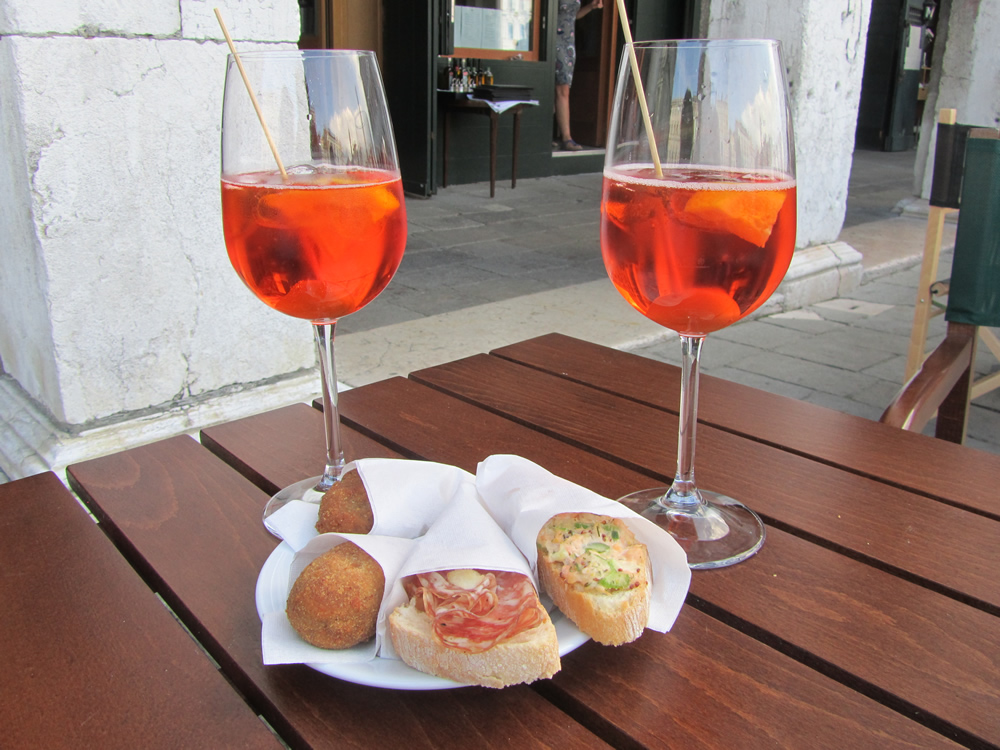
The History of the Spritz
The spritz originated in the Veneto in the 19th century, during the period of Austrian occupation that lasted from 1815 to 1866. The Austrian soldiers and officials stationed in the Veneto found the local wines — full-bodied, often high in alcohol and deeply unfamiliar in style — difficult to drink in quantity. Their solution was to ‘spritz’ (from the German spritzen, to spray or splash) the wine with a burst of water from a siphon, diluting it and making it more drinkable in the northern European manner.
This practice — wine diluted with sparkling water — gradually became absorbed into the local drinking culture of the Veneto, evolving over the following decades from a simple dilution technique into the more structured aperitivo drink that emerged in the early 20th century. The addition of a bitter liqueur — first Campari, then the locally produced Aperol (launched in Padua in 1919) and Select (produced in Venice since 1920) — transformed the diluted wine into the distinctive three-part drink that defines the modern spritz: base wine (Prosecco), sparkling water, bitter liqueur.
The Aperol Spritz version — three parts Prosecco, two parts Aperol, one splash of soda — was codified as the ‘Spritz’ by Campari Group marketing in the 2000s and became globally dominant. But in Venice itself, and in the broader Veneto, the Select Spritz predates the Aperol version and is considered by most Venetians to be the more authentic local drink.
| The spritz is not simply a cocktail — it is a social ritual. Aperitivo hour in Venice (roughly 6–8pm) transforms the campi and fondamente into outdoor living rooms: groups gathering around tables or standing on the fundamenta with orange drinks in hand, cicchetti being passed, conversations expanding. Understanding the spritz means understanding this ritual, not just the drink. |
The Spritz Variants: An Honest Guide
| Variant | Base | Character | Notes |
| Spritz al Select | Select | Bitter, ruby, complex | The Venetian original. Select is produced in Venice and has been since 1920. More bitter and more complex than Aperol; the preferred choice of most Venetians. Garnished with an olive. |
| Aperol Spritz | Aperol | Sweet-bitter, orange, accessible | The globally dominant variant. Lighter, sweeter and less bitter than the Select version; introduced to a wider audience than the traditional Venetian recipe. Ubiquitous internationally. |
| Campari Spritz | Campari | Intensely bitter, ruby red | The most aggressively bitter variant — Campari’s flavour is significantly stronger than either Select or Aperol. For those who want the spritz without any sweetness compromise. |
| Cynar Spritz | Cynar | Herbal, artichoke-bitter | An artichoke-based bitter from the Veneto; the spritz variant favoured by Venetians who find Aperol too sweet. Increasingly popular in quality bars across the city. |
| Rabarbaro Spritz | Rabarbaro | Earthy, rhubarb-dark | Made with a rhubarb-based amaro; an acquired taste and a mark of genuine aperitivo connoisseurship. Rarely seen outside the most serious Venetian bars. |
| Hugo Spritz | Elderflower liqueur | Floral, lighter, Alpine | Not a Venetian variant — the Hugo originated in South Tyrol. Made with elderflower liqueur (St Germain or similar), Prosecco and mint. Very popular with visitors; regarded with mild amusement by Venetians. |
| The Aperol vs Select question is not merely a matter of taste — it is a reliable indicator of local vs tourist bar culture. If a Venice bar serves only Aperol Spritz (often pre-mixed in large quantities), it is catering primarily to international visitors. If Select is prominently on the menu and the bartender asks which you want, you are in a bar with local credibility. Order Select. |
The Prosecco Question
The wine base of the spritz is Prosecco — specifically, the sparkling wine from the Conegliano-Valdobbiadene DOCG zone in the Treviso hills north of Venice, the same UNESCO World Heritage wine landscape covered in the Palladian Villas and Wine section of this guide. The quality of the Prosecco in the spritz makes a significant difference to the final result, and a bar that uses a good-quality Prosecco Superiore rather than a generic industrial sparkling wine will produce a noticeably better drink.
The correct Prosecco for a spritz is dry (brut or extra brut) rather than sweet (demi-sec or extra dry, which despite their names are actually sweeter). The bitterness of the aperitivo liqueur — Select, Aperol or Campari — requires the dryness of the wine to be in balance; a sweet Prosecco makes the spritz cloying. Good Venetian bars use Brut or Extra Brut Prosecco as standard; tourist-oriented bars sometimes use sweeter versions or lower-quality base wines that affect the result significantly.
The Unwritten Rules of Aperitivo Culture
The spritz is inseparable from the aperitivo ritual — and the aperitivo ritual has conventions that are worth knowing before participating in it.
- The spritz is drunk in the early evening — typically between 6pm and 8pm, before dinner. Ordering a spritz with lunch or in the middle of the afternoon is understood, but the aperitivo context is the natural home of the drink.
- Cicchetti (small plates) accompany the spritz at virtually every serious bar. Ordering a drink without eating is acceptable, but the combination of a spritz and two or three cicchetti is the standard format and the correct way to experience Venetian aperitivo culture.
- The spritz glass is a large wine glass (not a tumbler) in the traditional Venetian format. A bar that serves the spritz in the correct glass — rather than in a rocks glass or a random vessel — is a bar that takes the drink seriously.
- The garnish matters: Select Spritz is traditionally served with a green olive on a cocktail stick. Aperol Spritz is typically garnished with a slice of orange. The olive with the Select version is not decorative — it is part of the flavour balance, and eating it at the end of the drink is entirely correct.
- Standing is fine. At the most authentic Venetian bacari and bars, aperitivo is often consumed standing at the counter or outside on the fondamenta. This is not a compromise — it is the traditional format, and it is significantly cheaper than table service.
| The spritz served at a table on St Mark’s Square will cost €15–20 or more, largely due to the cover charge and the location premium. The exact same drink — or a better one, using Select rather than Aperol — at a bacaro counter on the Fondamenta degli Ormesini in Cannaregio will cost €3.50–5. Both are the spritz; only one is Venetian aperitivo culture. |
The Best Places to Drink a Spritz in Venice
| Cantina Do Mori San Polo — near Rialto The oldest bacaro in Venice, operating since 1462. Excellent Select spritz served with the traditional olive. The aperitivo hour here is among the most authentically Venetian experiences in the city. | Osteria Al Squero Dorsoduro — facing the gondola boatyard Tiny, beloved, standing-only. Natural wines and an excellent spritz. The view across the Rio to the Squero di San Trovaso makes this one of the finest aperitivo settings in Venice. |
| Fondamenta degli Ormesini bars Cannaregio — northern waterfront A strip of bacari and bars along the canal, frequented predominantly by young Venetians. The spritz here is cheap, correctly made and consumed in exactly the social context the drink was invented for. | El Refolo Castello — near Via Garibaldi A neighbourhood bar with an almost entirely local clientele. The Select Spritz and cicchetti here represent the East Castello aperitivo tradition. Almost no tourists. |
| All’Arco San Polo — near Rialto Primarily known for its exceptional cicchetti, but the spritz here is excellent and the atmosphere at aperitivo hour — crowded, noisy, genuinely local — is exactly right. | Bacaro Jazz San Marco — near Rialto One of the few genuinely good bars in the San Marco sestiere that hasn’t become entirely tourist-oriented. Live music some evenings. Good spritz. Worth knowing for central location. |
How to Order a Spritz in Venice
Ordering a spritz in Venetian Italian is both simple and, in the right bar, appreciated:
- ‘Un spritz al Select’ — a Select Spritz, the locally correct choice
- ‘Un spritz all’Aperol’ — an Aperol Spritz, the internationally familiar variant
- ‘Un’ombra e uno spritz’ — a small glass of house wine and a spritz; this is the format for those who want to start with wine and transition to the aperitivo
- In a bacaro: ‘Cosa avete da cicchetti?’ — ‘What do you have in cicchetti?’ — allows the bartender to point to what is freshest that day
The price of a correctly made spritz in a genuine Venetian bar ranges from €3.50 to €5.50. If you are paying significantly more than this without sitting at a table, you are in a tourist-oriented establishment. This does not necessarily mean it will be bad, but it is a reliable indicator.
The Spritz Beyond Venice: Across the Veneto
The spritz is not exclusively Venetian — it is the aperitivo of the entire Veneto region, and every city from Verona to Treviso to Padua has its own local spritz culture. Padua claims the Aperol Spritz as its own invention (Aperol was launched there in 1919); Verona has a strong Campari Spritz tradition; Treviso is the heartland of the Prosecco that forms the base of all versions.
The Veneto spritz tradition is, in this sense, the broader culinary and social context within which the Venetian version sits. Visitors who explore the Veneto mainland — particularly on the Palladian Villas and Wine tour — will encounter the spritz in its regional diversity, tasting the differences between the Aperol-dominant culture of Padua, the more bitter Campari tradition of Verona, and the Select-anchored Venetian version that is the focus of this guide.
| The Venice Guide and Boat Business and Faith in Rialto tour includes a cicchetti and wine experience at a genuine Venetian bacaro — the ideal context for trying the Select Spritz for the first time, with a guide who can explain the history and the correct approach. For visitors on the Palladian Villas and Wine day trip, the aperitivo culture of the Veneto mainland provides an interesting regional comparison. |
Frequently Asked Questions
What is the difference between Aperol and Select Spritz?
Aperol is a lighter, sweeter, orange-flavoured aperitivo with a lower alcohol content (11%), produced in Padua. Select is more bitter, more complex, ruby-red and higher in alcohol (17.5%), produced in Venice since 1920. In Venice, Select is considered the traditional and more authentic base for the spritz; Aperol’s global dominance is a more recent marketing phenomenon. For a first-time visitor, the Select Spritz is the more characteristically Venetian experience.
How much should a spritz cost in Venice?
In a genuine bacaro or neighbourhood bar, €3.50–5.50 for a correctly made spritz. At a table in a tourist-facing bar or café, €8–15. On St Mark’s Square, €15–25 including the table surcharge. The drink itself is the same; what you are paying for at the higher price points is the location and the setting.
When should I drink a spritz in Venice?
The correct moment for the spritz is aperitivo hour — roughly 6pm to 8pm, before dinner. This is when the city’s bars and bacari fill with locals as well as visitors, when the cicchetti are at their freshest and most varied, and when the social atmosphere of the Venetian evening is at its most convivial.
Three Parts, One City, Five Centuries of Aperitivo
The spritz is, in the end, a drink that tells a story about Venice and its relationship with the world. It begins with Austrian soldiers unable to drink the local wine at full strength. It passes through the industrial innovation of the early 20th century (Aperol, 1919; Select, 1920; Prosecco’s rise as the region’s signature sparkling wine). It culminates in the global cultural phenomenon of the early 21st century, when the Venetian aperitivo ritual became one of the most recognisable drinking cultures on earth.
In Venice itself, the story continues unchanged: the Same campari of aperitivo time in the same campi, the same colour of orange and ruby in the large glasses, the same olive on the cocktail stick in the Select version, the same conversation at the counter of the same bacari that have been serving evening drinks for longer than most countries have existed. Order the Select. Get the olive. Eat a polpetta. This is how it is done.
| Experiencing the spritz in its correct context — at aperitivo hour, at a genuine bacaro, with cicchetti — is one of the simplest and most authentically Venetian things available to a visitor. Venice Guide and Boat’s guided experiences in the Rialto area and across the city include the opportunity to do exactly this with local expert guidance. |

